
Reconstructive Plastic Surgery
Ingrown Toenail and Nail Surgery
An ingrown toenail occurs when the edge of a nail, usually on the big toe, grows into the surrounding skin. Symptoms may include tenderness, swelling and pain, with redness or discharge if infection develops.

Ingrown toenails occur more frequently in male athletes and may also be associated with tight footwear. Cutting the nails at an angle is another common contributing factor.
Symptoms vary and may include tenderness, pain and swelling along the side of the nail. Infection may also cause redness, discharge and more intense pain. Initial care may include foot baths and footwear with adequate room for the toes.
Symptoms vary and may include tenderness, pain and swelling along the side of the nail. Infection may also cause redness, discharge and more intense pain. Initial care may include foot baths and footwear with adequate room for the toes.
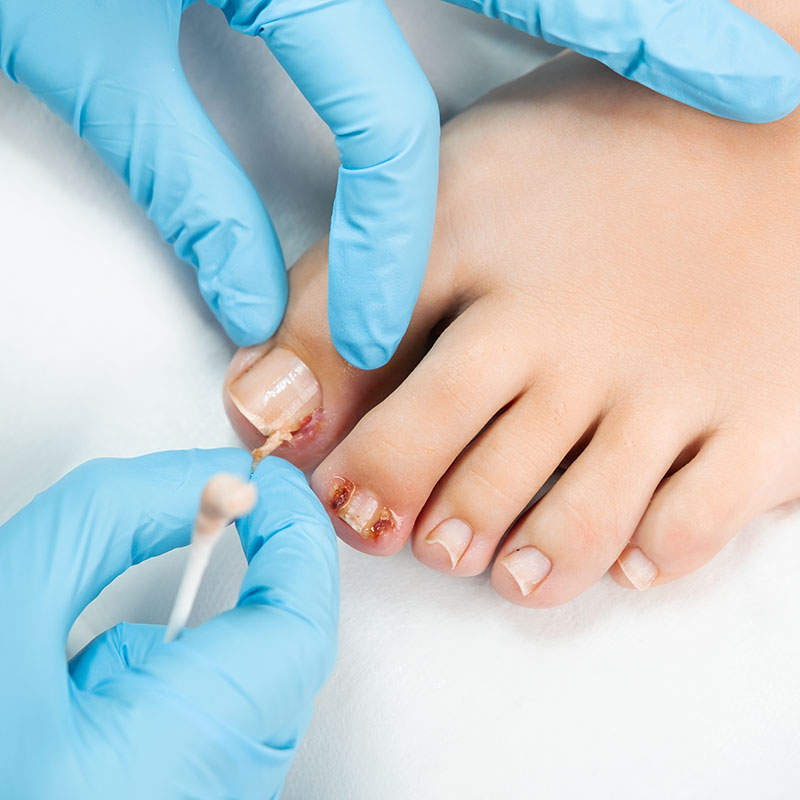
Partial or Total Nail Removal
When the problem becomes chronic, surgical treatment may involve removal of the affected part of the nail down to the matrix, together with inflamed adjacent tissue. In selected cases, removal of the whole nail may be considered.
Nail surgery may be combined with treatment of the germinal matrix beneath the proximal nail fold, with the aim of preventing regrowth of the affected part or the whole nail. Matrix treatment may be performed surgically or with diathermy.
In selected cases, laser treatment may be used to ablate the affected nail, matrix and granulation tissue.
Nail surgery may be combined with treatment of the germinal matrix beneath the proximal nail fold, with the aim of preventing regrowth of the affected part or the whole nail. Matrix treatment may be performed surgically or with diathermy.
In selected cases, laser treatment may be used to ablate the affected nail, matrix and granulation tissue.
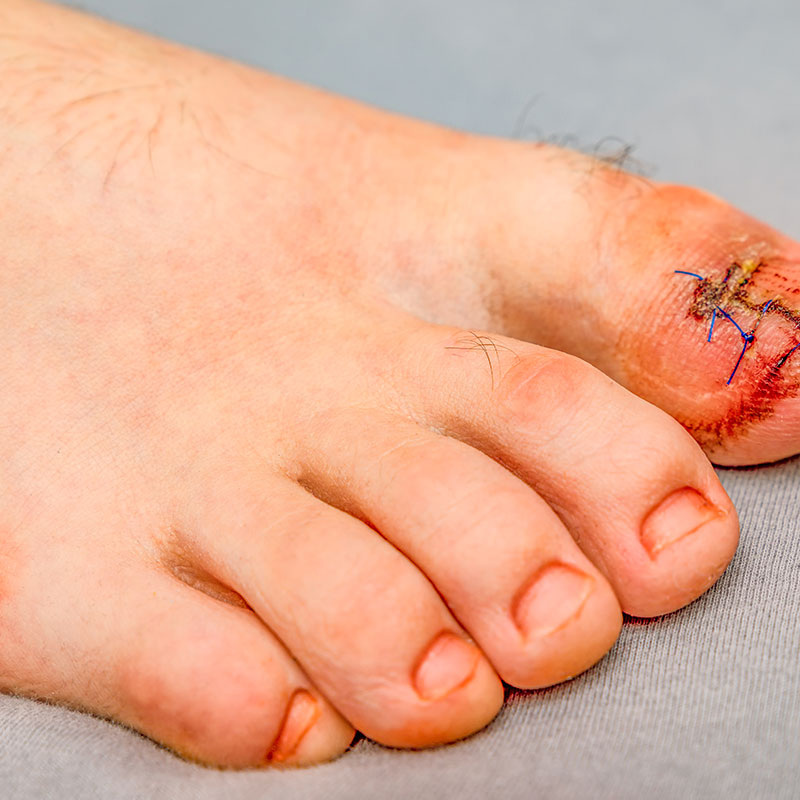
Preventing an Ingrown Toenail
Everyday footwear should provide adequate room around the toes. When trimming the nails:
- Soak the feet briefly in warm water to soften the nails.
- Use clean, sharp nail clippers.
- Cut straight across the top. Do not round the corners or cut the nails too short.
- Do not pull at or pick the nails. Keep the feet clean and dry. People with diabetes should have their feet and nails checked regularly.
Frequently Asked Questions
What is an ingrown toenail?
An ingrown toenail occurs when the edge of a nail, usually on the big toe, enters the surrounding skin. Tight footwear and cutting the nail at an angle may contribute.
What are the symptoms of an ingrown toenail?
Symptoms may include tenderness, pain and swelling along the side of the nail. Infection may also cause redness, discharge and more intense pain.
How is an ingrown toenail initially managed?
Initial conservative measures may include foot baths and footwear with adequate room for the toes to reduce pressure and irritation.
When may surgery be required?
When the problem becomes chronic or does not respond to conservative care, removal of the affected part of the nail and adjacent inflamed tissue may be considered.
What may surgical treatment involve?
Surgery may involve partial or total nail removal and treatment of the germinal matrix, using surgical excision or diathermy, with the aim of reducing recurrence.
Can laser be used for an ingrown toenail?
In selected cases, laser may be used to ablate the affected nail, matrix and granulation tissue. The method is selected after medical assessment.
How can an ingrown toenail be prevented?
Prevention includes wearing footwear with adequate toe room, cutting nails straight across without rounding the corners, and avoiding cutting them too short.
How should toenails be trimmed?
Soak the feet briefly in warm water, use clean and sharp nail clippers, cut straight across and avoid pulling at or picking the nails.
What should people with diabetes consider?
People with diabetes should check their feet regularly and follow appropriate professional advice for foot and nail care because their risk of complications may be higher.
When should I seek medical assessment?
Medical assessment is appropriate when symptoms persist or worsen, or when redness, discharge or increasing pain suggests infection.
Would you like to discuss which option is suitable for you?
The right indication and a personalised treatment plan are determined after medical assessment.