Treatment for Men
FUE Hair Transplantation
FUE (Follicular Unit Extraction) hair transplantation, which involves transferring individual follicular units, has been performed since 2003. Follicular Unit Extraction is a minimally invasive hair implantation method. Its application requires specialised training by the medical team because it is a detailed technique.
Factors in Planning FUE Hair Transplantation
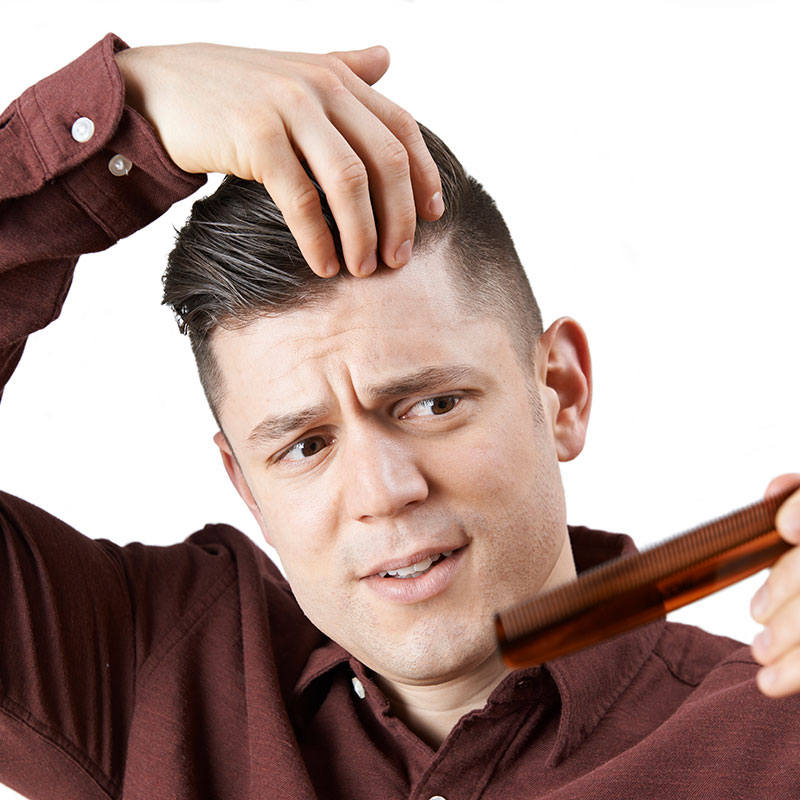
The planning and distribution of follicular units during placement are key aspects of hair transplantation. Factors considered when planning Follicular Unit Extraction include:
- The age of the patient undergoing hair transplantation
- The patient’s facial features
- The degree of alopecia before the procedure
- The number of available follicular units
- The patient’s expectations
- Possible future needs for another hair transplant procedure
Key Parameters of FUE Hair Transplantation
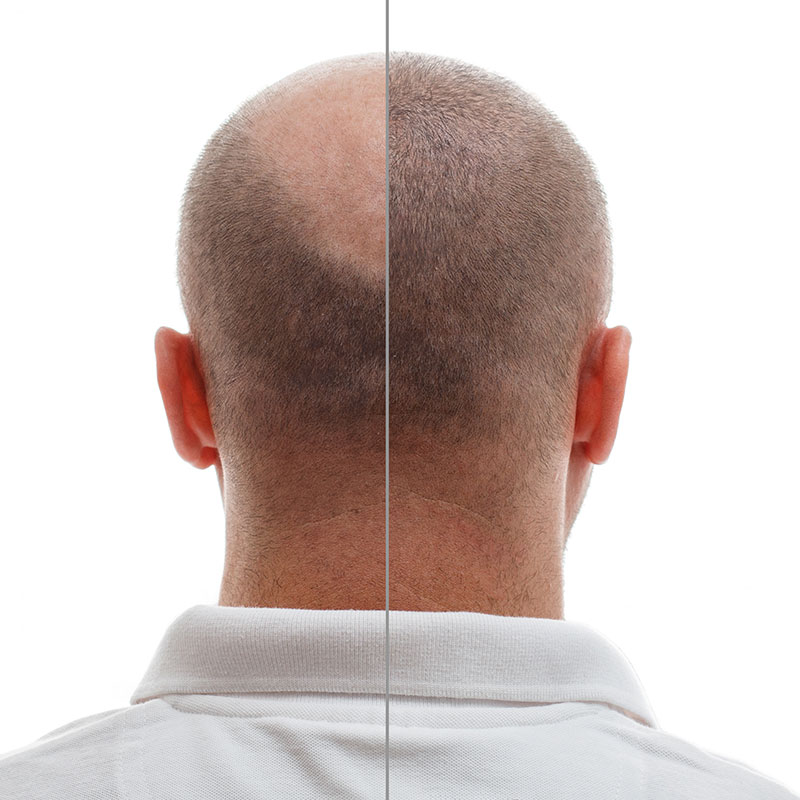
The planning and distribution of follicular units during FUE hair transplantation are tailored to each patient’s needs and are based on three parameters:
When the above parameters are followed, a success range of 95–98% is reported, without this constituting a guarantee of an individual outcome.
- Limiting the impact on the donor and recipient areas and planning even coverage
- Planning the direction and angle of implantation in relation to the characteristics of the recipient area
- Planning the intended density according to the size of the session, the available follicular units and the patient’s needs
When the above parameters are followed, a success range of 95–98% is reported, without this constituting a guarantee of an individual outcome.
Stages of FUE Hair Transplantation
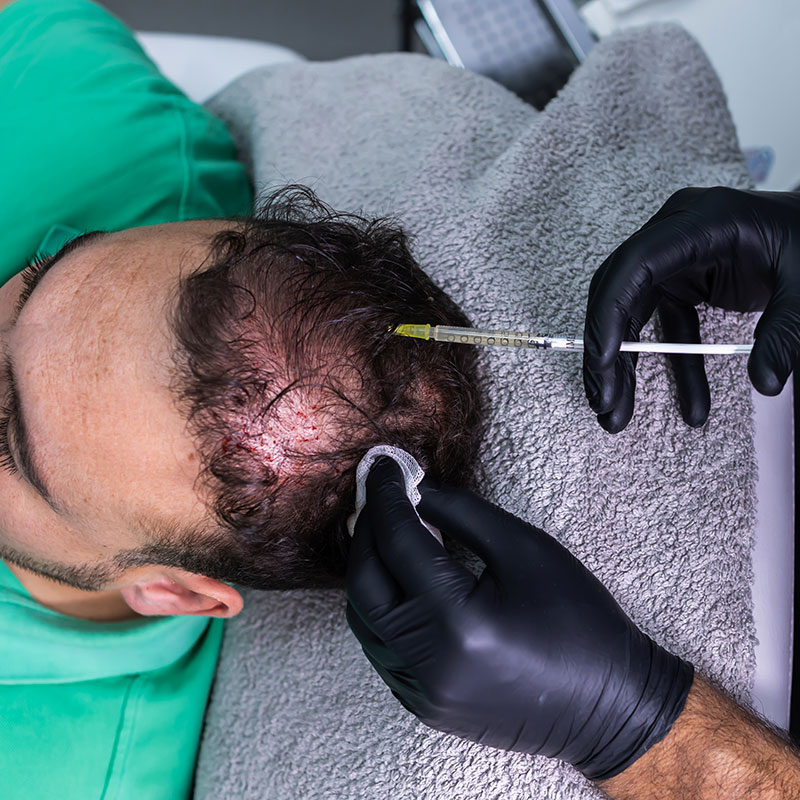
- Identification of the donor area and administration of local anaesthesia before the procedure
- Extraction of the follicular units one by one (1,000 grafts per hour)
- Storage of the grafts for up to 6 hours in a moist, cooled environment at 2–4°C
- Planning of the implantation area (recipient area), where the follicular units extracted using Follicular Unit Extraction will be placed
Patient Reviews
Patient experiences from our clinic and treatments.
 Anastasios K...

★★★★★
Excellent service and professionalism. The doctor is very friendly, the staff are very kind, and the reception team in particular is the best!
 Aris L...
★★★★★
In a few words, simply wonderful. Hopefully no one ever needs a doctor, but if you ever need a plastic surgeon, I recommend him without hesitation.
 Chris M...
★★★★★
There is a reason why this is one of the best clinics in the city... The team is amazing, and they are all professional, extremely helpful and kind. Maria is truly a star, 100%.
 Pavlos S...
★★★★★
Perfect results in less time. Very kind and highly regarded staff, with prompt appointment service.
Follicular Unit Placement Techniques and the Use of an Implanter
The grafts are placed using a specialised implantation device. Individual follicular units may be implanted in two ways:
- By creating small openings that receive the grafts. These recipient sites are created with a needle or small blade. The grafts are then placed with forceps or an implanter. Planning includes the angle and direction of each follicular unit according to the recipient area.
- By inserting the grafts with a specialised implantation device (implanter device), without creating recipient sites beforehand. The device allows the direction and angle of implantation to be controlled according to the recipient area.
Characteristics of FUE Hair Transplantation
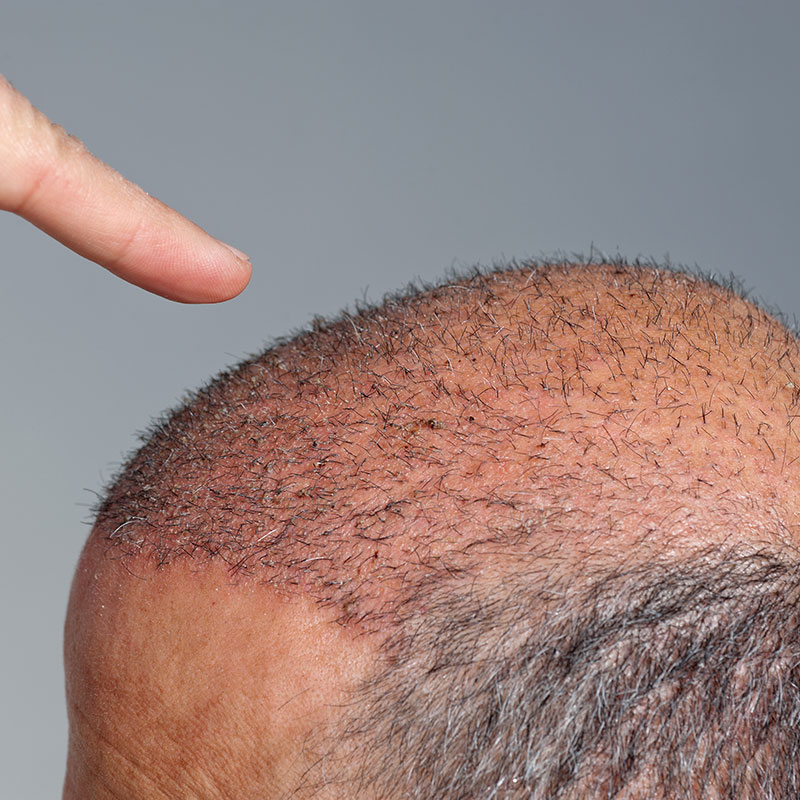
FUE involves transferring individual follicular units, whereas FUT or the strip technique involves removing a strip of skin from the donor area.
- FUE hair transplantation is a minimally invasive technique performed under local anaesthesia
- Bleeding during Follicular Unit Extraction may be limited compared with FUT
- FUE does not create a linear incision in the harvesting area, although small extraction marks may remain
- Postoperative discomfort varies between individuals
- Return to everyday activities is determined by the course of recovery and the doctor’s instructions
- The wound in the donor area is not sutured
- During FUE hair transplantation, the distribution of graft extraction across the donor area is planned
- The number of hairs to be collected is planned according to the available reserves in the donor area and possible future needs
- Complications such as forehead swelling or folliculitis may occur after hair transplantation, and their course is assessed by the doctor
- When indicated, FUE allows hair to be harvested from body areas such as the chest, back or beard. Healing of the donor area is assessed individually
- FUE may be used for small areas, such as the eyebrows, or for larger transplant areas. FUT involves removing a strip of skin from the donor area and creates a linear incision
Number of Grafts and Sessions
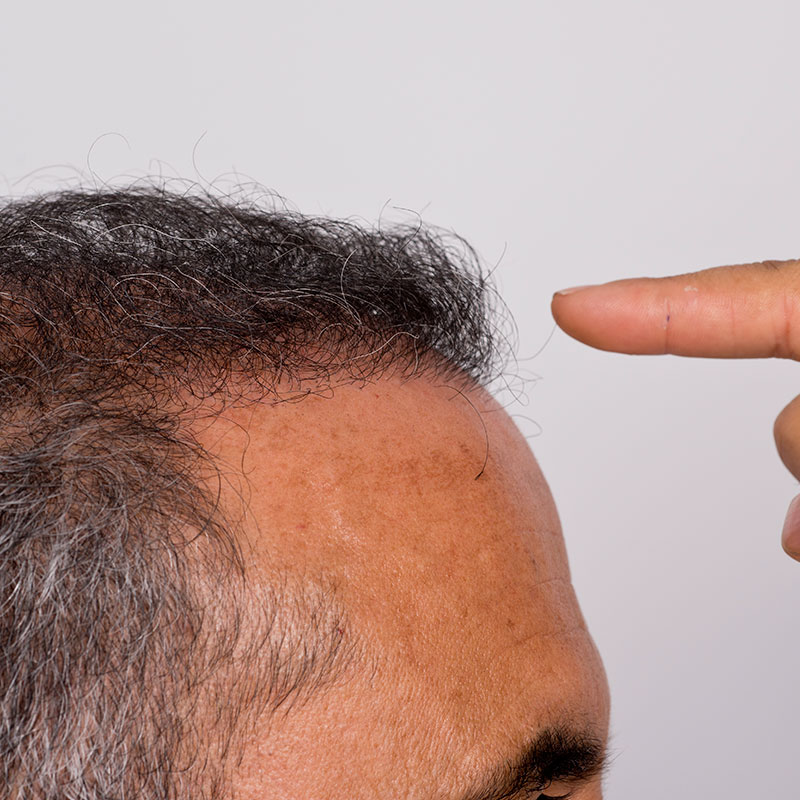
During one session, a specialised team may transplant up to 2,000 follicular units, corresponding to approximately 5,000–7,000 hairs. One graft may contain 1–5 hairs. FUE may also be used in patients with severe alopecia, depending on the available follicular units and the individual treatment plan. Maintaining the graft storage conditions is part of the process until implantation.
Return to Activities
Because of the small size of the extraction sites on the scalp, a return to light activities may be possible on the same day, in accordance with the doctor’s instructions. Sensation, bleeding and the course of recovery vary between individuals.
Return to Activities
Because of the small size of the extraction sites on the scalp, a return to light activities may be possible on the same day, in accordance with the doctor’s instructions. Sensation, bleeding and the course of recovery vary between individuals.
Progress and Results
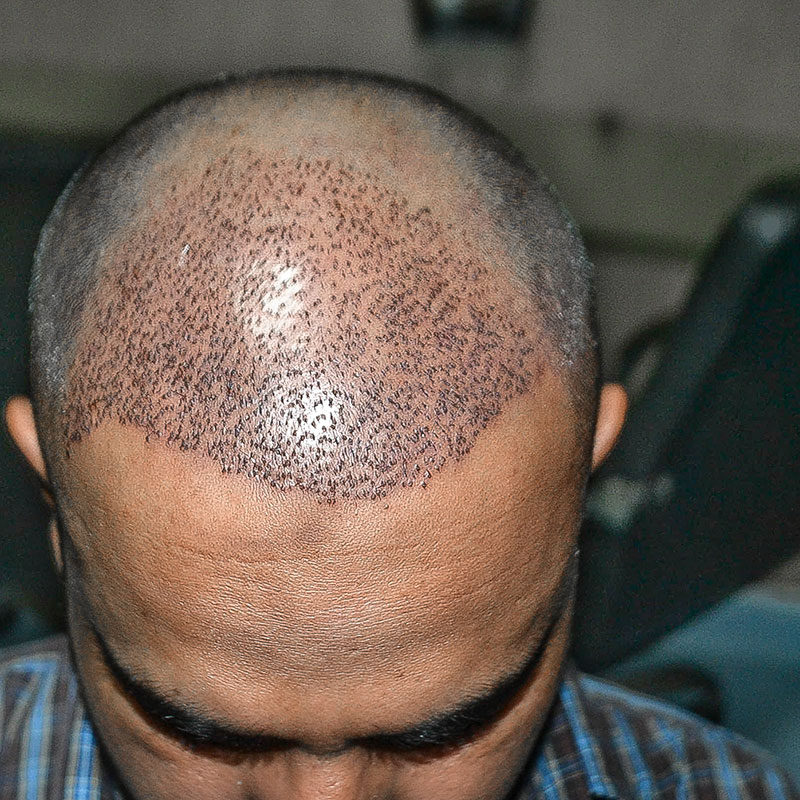
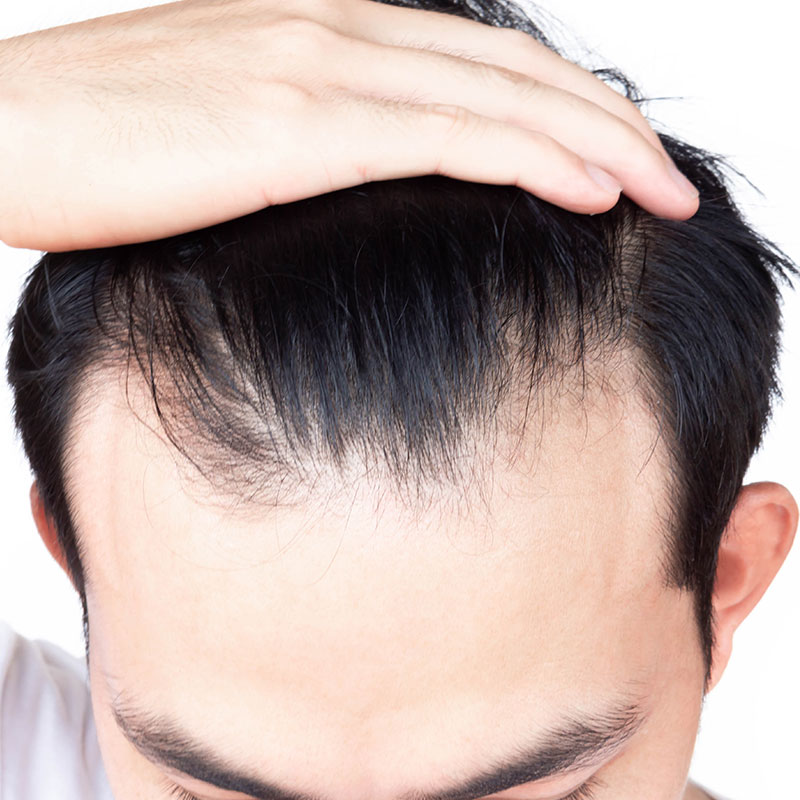
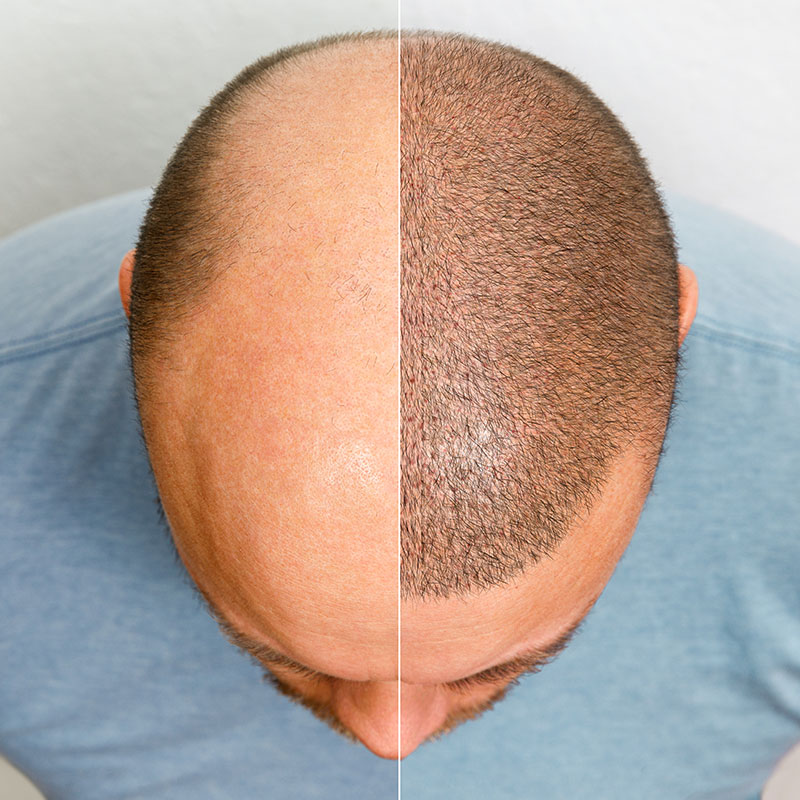
The hairs from the transplanted follicular units may begin to shed approximately 2–4 weeks after the procedure (hair shedding). New hair growth begins to appear between the 1st and 3rd month after the procedure. A greater amount becomes visible after 6 months, and the process is completed at 12 months. The possible complementary use of PRP and topical minoxidil is assessed individually by the doctor.
FUE Hair Transplantation in Other Areas
FUE hair transplantation may also be used in the following cases after an individual assessment:
Eyebrow Transplantation
FUE may be used to restore eyebrows affected by thinning. In some cases, thinning may be associated with repeated hair removal in the eyebrow area. Individual follicular unit transfer is planned according to the characteristics of the area and each person’s needs.
Management of Sparse Beard Growth
Follicular Unit Extraction may be used to address sparse facial hair due to trauma or individual characteristics, as well as gaps in the beard, following assessment by the doctor.
Scar Improvement
FUE may be used to improve the appearance of scars resulting from previous FUT or strip procedures, following an individual assessment.
Eyebrow Transplantation
FUE may be used to restore eyebrows affected by thinning. In some cases, thinning may be associated with repeated hair removal in the eyebrow area. Individual follicular unit transfer is planned according to the characteristics of the area and each person’s needs.
Management of Sparse Beard Growth
Follicular Unit Extraction may be used to address sparse facial hair due to trauma or individual characteristics, as well as gaps in the beard, following assessment by the doctor.
Scar Improvement
FUE may be used to improve the appearance of scars resulting from previous FUT or strip procedures, following an individual assessment.
Frequently Asked Questions
Who may be considered for FUE hair transplantation?
FUE may be considered for people with androgenetic alopecia, scarring alopecia or sparse eyebrows or beard growth, provided that the donor area has enough follicular units for harvesting.
What are the stages of an FUE session?
The procedure begins with local anaesthesia, followed by the extraction of individual grafts, their storage for up to 6 hours in a moist, cooled environment at 2–4°C, and their placement in recipient sites or with an implanter, all within one day.
How is hair transplantation planned?
Planning is based on the extent of thinning, the number of available grafts and the individual patient’s needs, following assessment by the doctor.
Does FUE leave scars?
FUE does not create a linear incision. The extraction sites, measuring 0.8–1 mm, leave small marks whose appearance is assessed as healing progresses.
What is recovery like after hair transplantation?
Return to everyday activities depends on the course of recovery and the doctor’s instructions. Mild redness may settle during the first few days, and hair-care products may be resumed within 10–14 days according to medical advice.
When do the results become visible?
The hairs from the transplanted follicular units may shed after approximately 2–4 weeks. New hair growth begins from the 1st month, and the final result becomes visible within 8–12 months.
Can follicular units be harvested from an area other than the scalp?
Yes. If the scalp donor area is insufficient, follicular units may be harvested from the beard or chest using the FUE method. Healing and any marks in the donor area are assessed individually.
What should I consider before and after the session?
Medication and alcohol consumption should be discussed with the doctor. Strenuous exercise should be avoided, and the scalp should be protected from the sun and harsh cleansing products for 2–3 months, in accordance with medical advice.
How do FUE and FUT differ?
FUE involves extracting individual follicular units without a linear incision, whereas FUT involves removing a strip of skin and leaves a linear scar in the donor area. The choice of technique is assessed individually.
Is maintenance recommended after hair transplantation?
The possible complementary use of PRP, topical minoxidil or medication such as finasteride is assessed individually by the doctor.
How many sessions are required?
For limited needs, one session may be sufficient. In more extensive cases or when greater density is sought, a second session may be required after 6–12 months.
Would you like to discuss which option is suitable for you?
The right indication and a personalised treatment plan are determined after medical assessment.