Reconstructive Plastic Surgery
Rhinophyma Treatment and Reconstruction in Thessaloniki
Learn about rhinophyma, its symptoms and the available treatment and reconstructive options from a plastic surgeon in Thessaloniki.
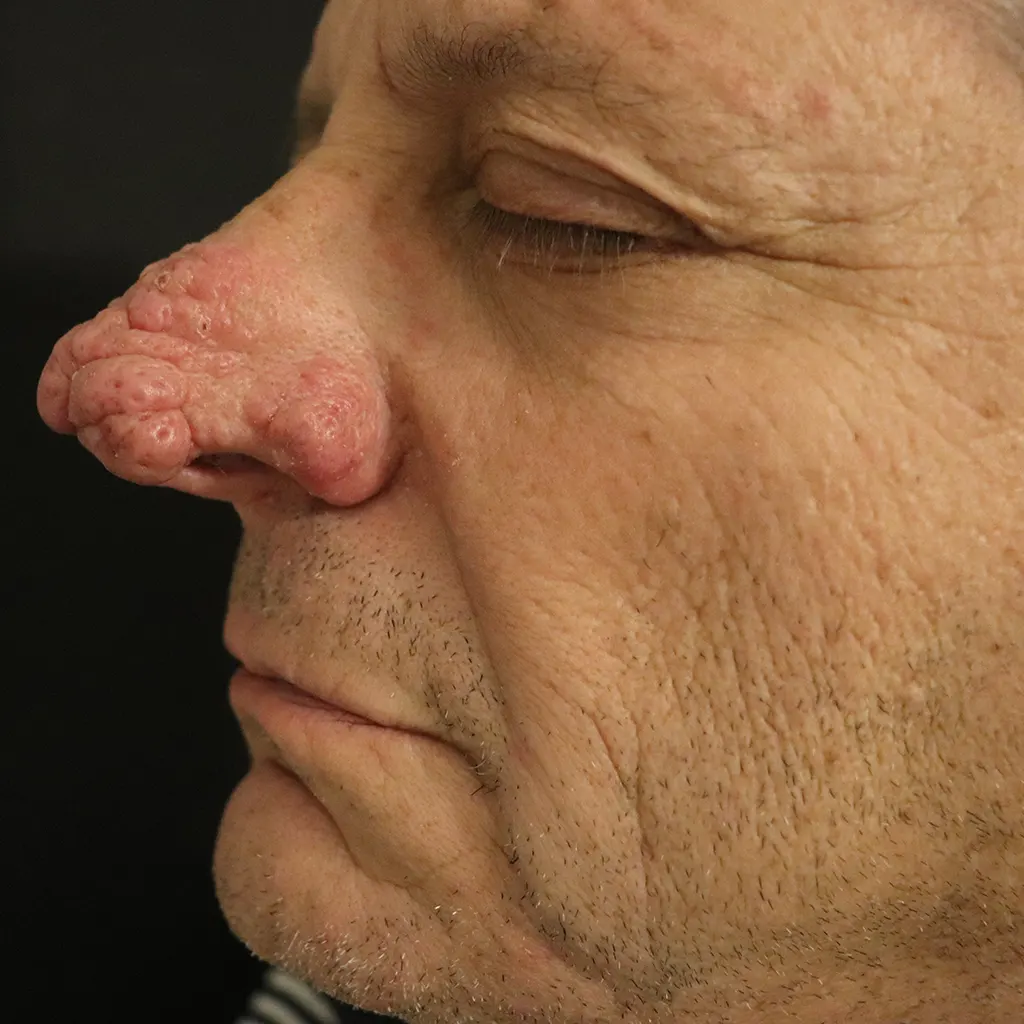
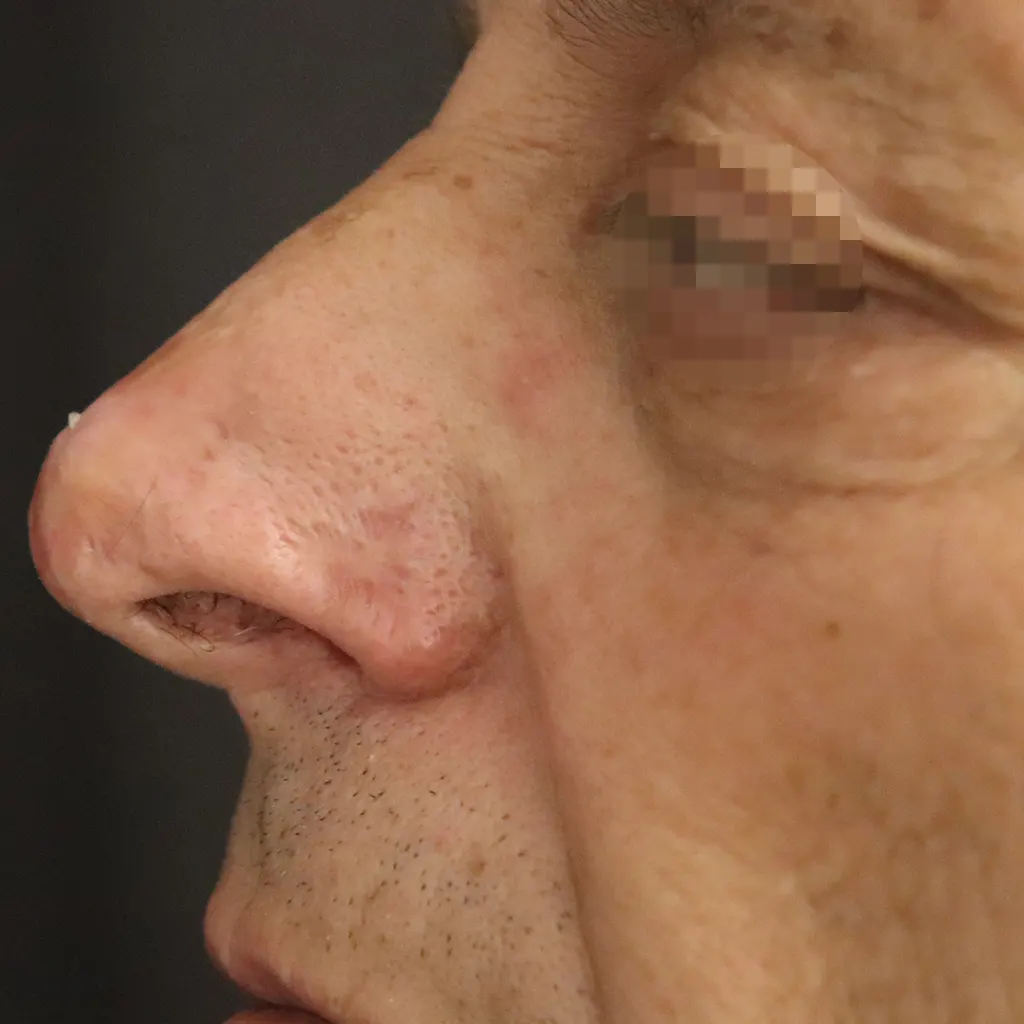
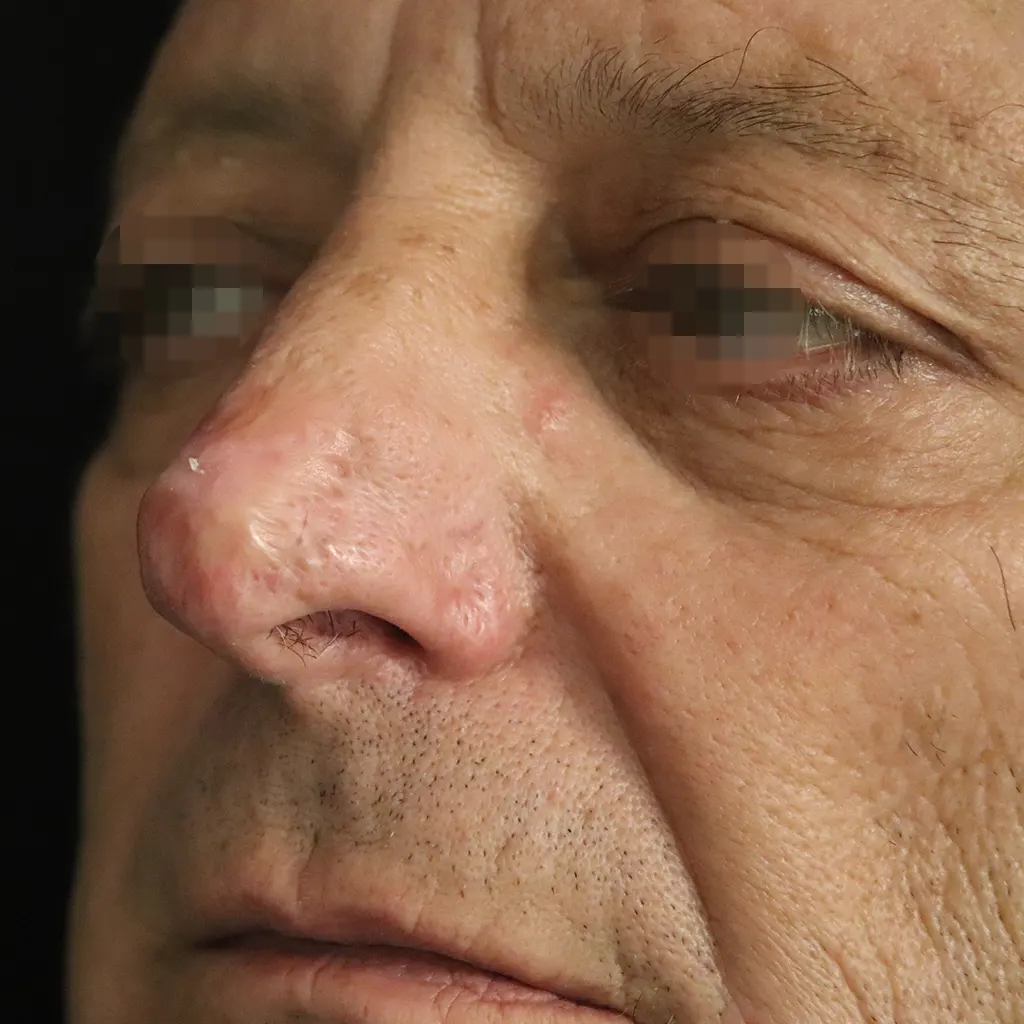
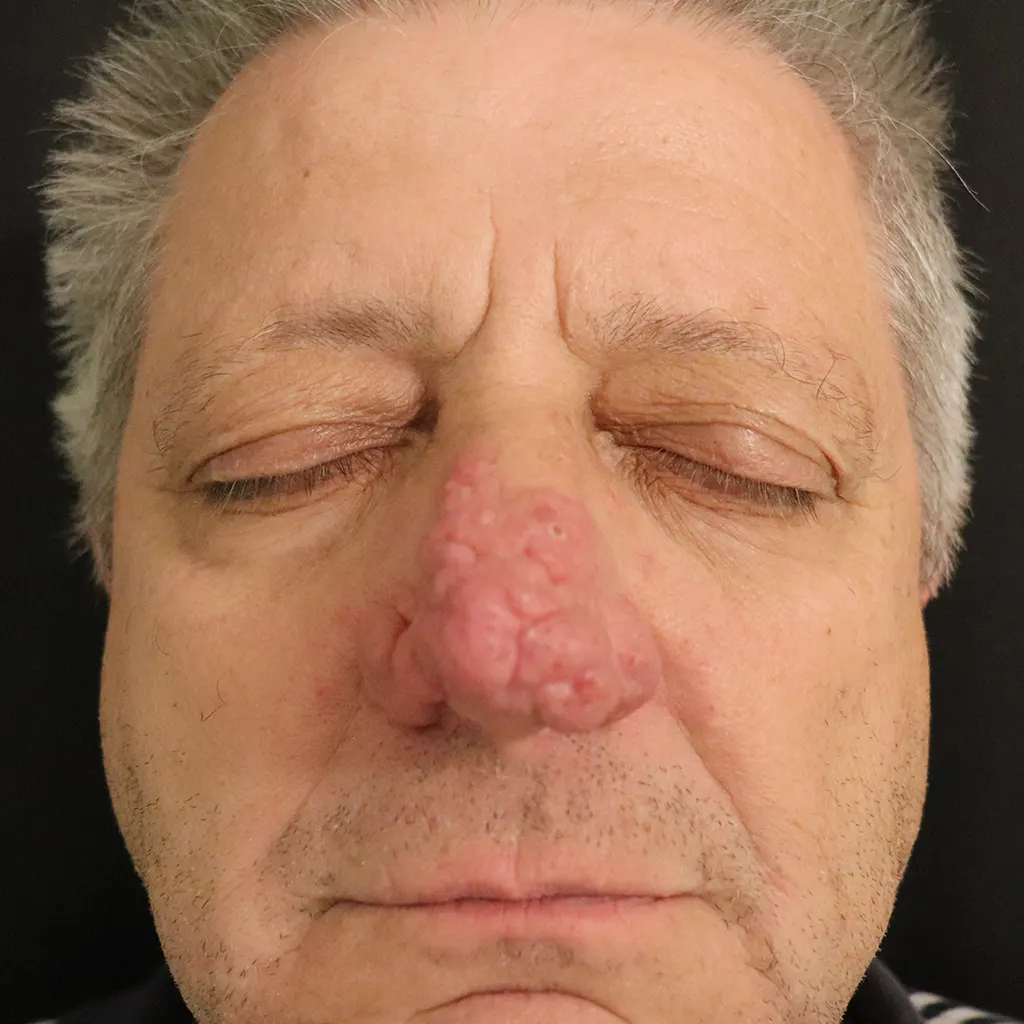
Rhinophyma is a chronic condition that causes gradual thickening of the skin and enlargement of the sebaceous glands of the nose. The surface of the nose may become irregular, with prominent pores, redness and changes to its normal contour.
At our practice in Thessaloniki, each patient receives an individual assessment and treatment plan. The aim is to remove pathologically enlarged tissue and restore the shape of the nose as naturally as possible.
At our practice in Thessaloniki, each patient receives an individual assessment and treatment plan. The aim is to remove pathologically enlarged tissue and restore the shape of the nose as naturally as possible.
What Is Rhinophyma?
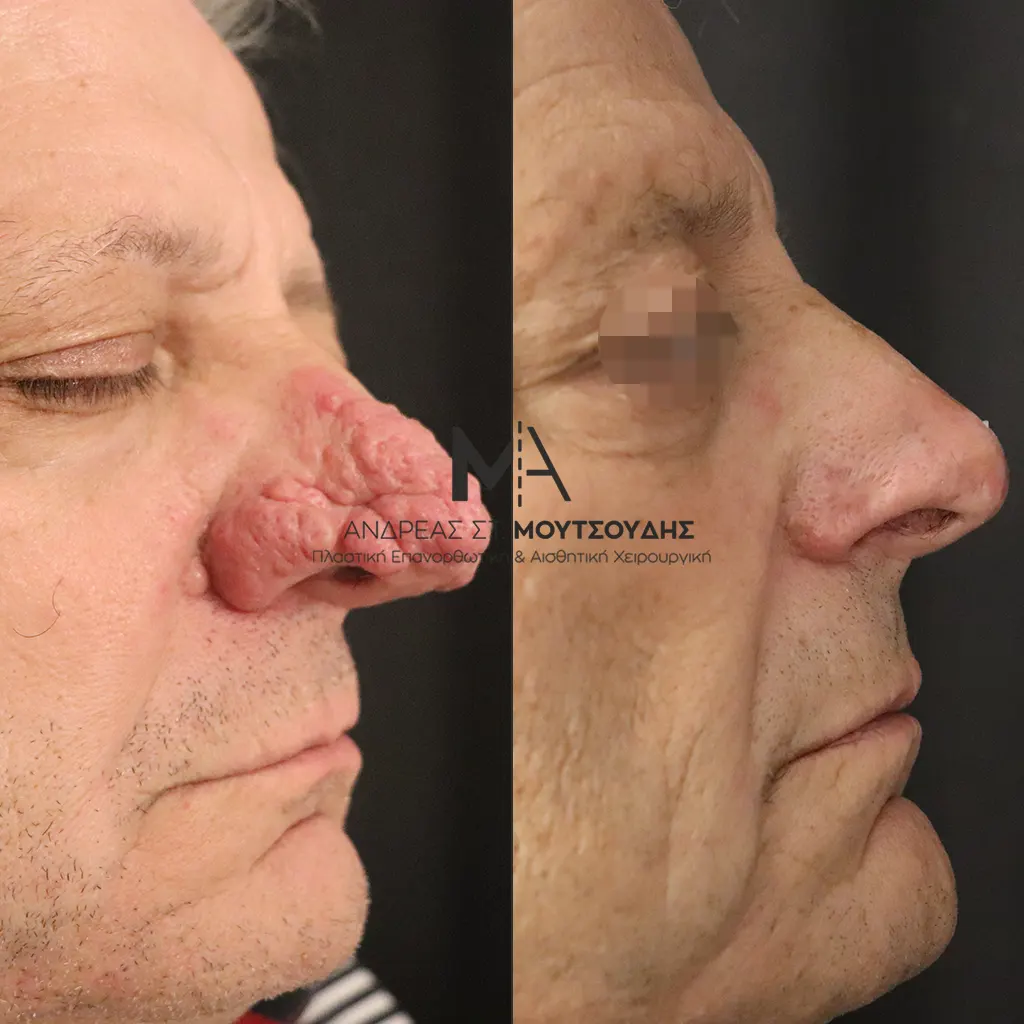
Rhinophyma is a phymatous or hypertrophic form of rosacea that mainly affects the nose. It is characterised by sebaceous-gland hyperplasia, thickening of connective tissue and progressive changes in the texture and contour of the nose.
It usually develops slowly. Some people have a history of rosacea, while in others rhinophyma may appear without marked preceding symptoms.
It usually develops slowly. Some people have a history of rosacea, while in others rhinophyma may appear without marked preceding symptoms.
How Does Rhinophyma Present and Progress?
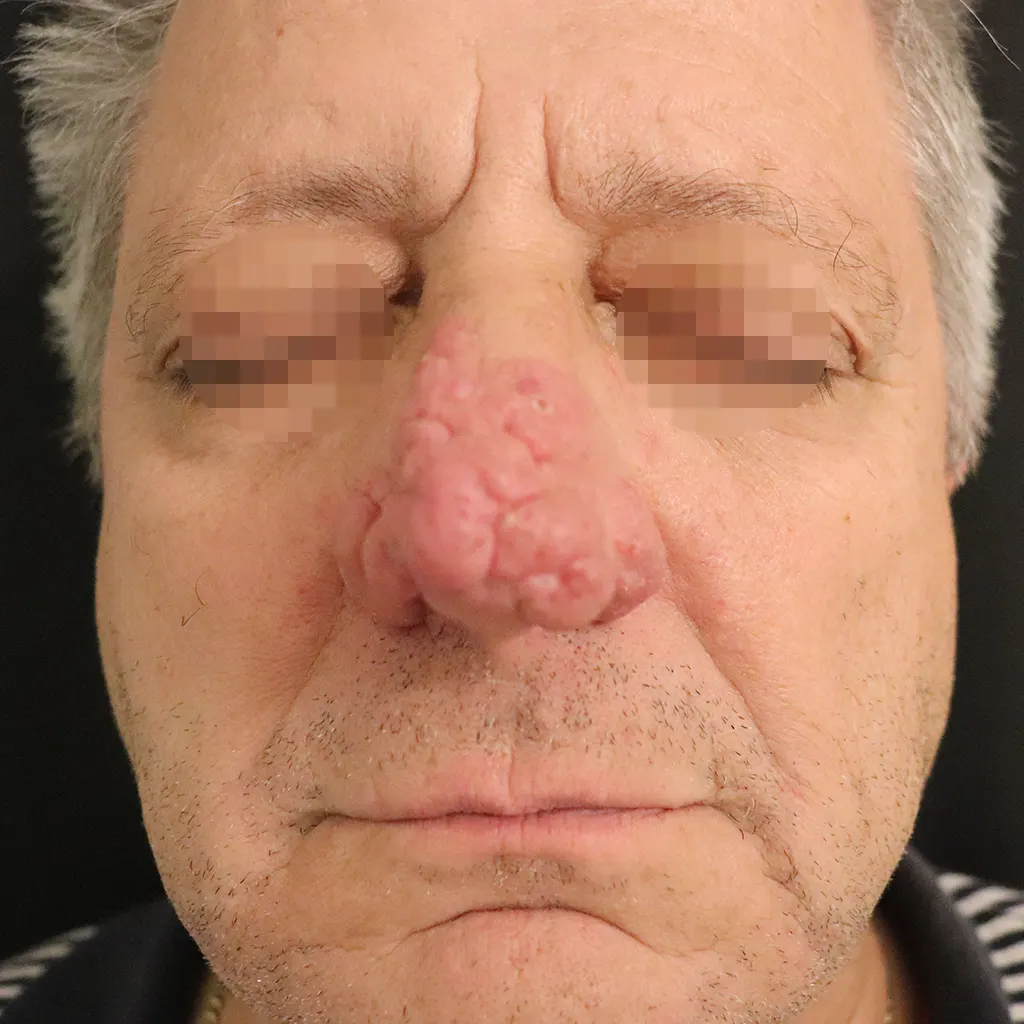
The most common features include:
• thickening and enlargement of the skin of the nose,
• an irregular or nodular surface,
• enlarged pores and increased oiliness,
• redness and visible blood vessels,
• gradual changes in the shape of the nose.
In advanced cases, tissue enlargement may also affect nasal function. Rhinophyma is not caused by alcohol consumption. Alcohol can temporarily worsen redness in people with rosacea, but it is not considered the cause of the condition.
• thickening and enlargement of the skin of the nose,
• an irregular or nodular surface,
• enlarged pores and increased oiliness,
• redness and visible blood vessels,
• gradual changes in the shape of the nose.
In advanced cases, tissue enlargement may also affect nasal function. Rhinophyma is not caused by alcohol consumption. Alcohol can temporarily worsen redness in people with rosacea, but it is not considered the cause of the condition.
How Is Rhinophyma Diagnosed?
Diagnosis is based mainly on clinical examination and assessment of the shape, extent and degree of tissue thickening. The doctor also looks for active signs of rosacea or other skin lesions.
If an atypical, suspicious or localised lesion is present, a biopsy or histological examination may be required to exclude other skin conditions. An accurate diagnosis is necessary before the appropriate medical or surgical approach is selected.
If an atypical, suspicious or localised lesion is present, a biopsy or histological examination may be required to exclude other skin conditions. An accurate diagnosis is necessary before the appropriate medical or surgical approach is selected.
How Is Rhinophyma Treated?
Treatment depends on the stage, extent and depth of tissue thickening. In the early stages, concurrent management of active rosacea may be required to control inflammation, redness and flare-ups.
Once significant skin hypertrophy has developed, medication alone is usually insufficient to restore the contour of the nose. In these cases, procedural techniques are considered to remove excess tissue and reshape the nose.
Once significant skin hypertrophy has developed, medication alone is usually insufficient to restore the contour of the nose. In these cases, procedural techniques are considered to remove excess tissue and reshape the nose.
Surgical and Reconstructive Treatment
The principal aim of rhinophyma reconstruction is the gradual removal of pathologically enlarged tissue and restoration of the normal nasal contour, while preserving healthy structures.
Depending on the features of each case, treatment may involve surgical excision, electrosurgery, dermabrasion, CO₂ laser, Er:YAG laser or a combination of techniques. No single technique is suitable for everyone. The approach is selected after clinical examination and individual planning.
Depending on the features of each case, treatment may involve surgical excision, electrosurgery, dermabrasion, CO₂ laser, Er:YAG laser or a combination of techniques. No single technique is suitable for everyone. The approach is selected after clinical examination and individual planning.
Recovery and Postoperative Care
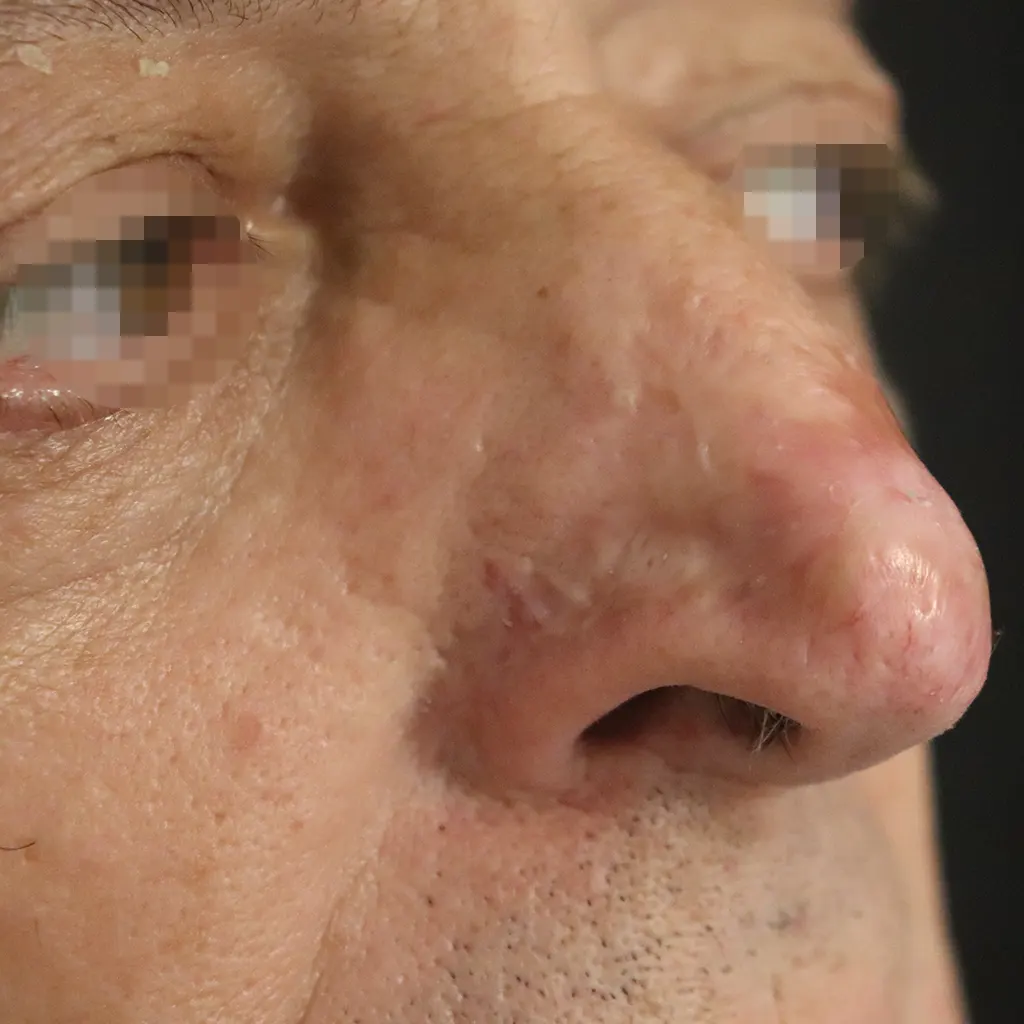
Healing time depends on the extent of the rhinophyma, the depth of treatment and the technique used. Redness, tenderness and gradual regeneration of the skin surface are expected after treatment.
Appropriate wound care, adherence to medical instructions, sun protection and scheduled follow-up contribute to uncomplicated healing. Specific instructions and the timing of return to everyday activities are determined individually.
Appropriate wound care, adherence to medical instructions, sun protection and scheduled follow-up contribute to uncomplicated healing. Specific instructions and the timing of return to everyday activities are determined individually.
Frequently Asked Questions
What is rhinophyma?
Rhinophyma is a chronic condition in which the skin of the nose thickens and the sebaceous glands and underlying connective tissue enlarge. The nose may gradually develop an irregular, nodular or enlarged appearance.
What are the symptoms of rhinophyma?
Rhinophyma may cause thickening and redness of the skin, prominent pores, visible blood vessels, nodules and progressive changes in the shape and contour of the nose.
Is rhinophyma associated with rosacea?
Rhinophyma is often associated with the phymatous form of rosacea. However, not everyone with rosacea develops rhinophyma, and in some cases there may be no marked preceding signs of the condition.
Is rhinophyma caused by alcohol consumption?
No direct causal relationship between alcohol consumption and rhinophyma has been established. The association is an outdated and incorrect social misconception.
How is rhinophyma diagnosed?
Diagnosis is usually based on clinical examination of the nose and assessment of the pattern and extent of skin thickening. If a lesion appears suspicious or unusual, the doctor may recommend histological examination.
How is rhinophyma treated?
Treatment is individualised according to the extent and depth of the condition. It may include surgical removal of enlarged tissue, electrosurgery, dermabrasion, laser treatment or a combination of techniques.
Can rhinophyma be treated with medication alone?
Medication may help control associated inflammation or rosacea. Once significant tissue thickening and enlargement have developed, procedural treatment is usually required.
What is the aim of rhinophyma reconstruction?
Reconstruction aims to remove pathologically enlarged tissue, improve the shape and contour of the nose and preserve as much healthy tissue as possible.
How long does recovery take after rhinophyma treatment?
Healing time varies according to the extent of the rhinophyma, the technique used and the individual characteristics of each patient. The doctor provides individual instructions for wound care and follow-up.
Can rhinophyma recur after treatment?
Recurrence or further tissue thickening is possible, particularly if the underlying condition remains active. Appropriate treatment, follow-up and management of associated rosacea contribute to maintaining the outcome.
Would you like to discuss which option is suitable for you?
The right indication and a personalised treatment plan are determined after medical assessment.