
Non-surgical Treatment
Hyperhidrosis: Assessment and Treatment
Hyperhidrosis is excessive sweating, most commonly affecting the underarms, palms and soles. Underarm hyperhidrosis is more common than excessive sweating of the palms or soles. Assessment considers the affected area, severity and possible contributing factors.
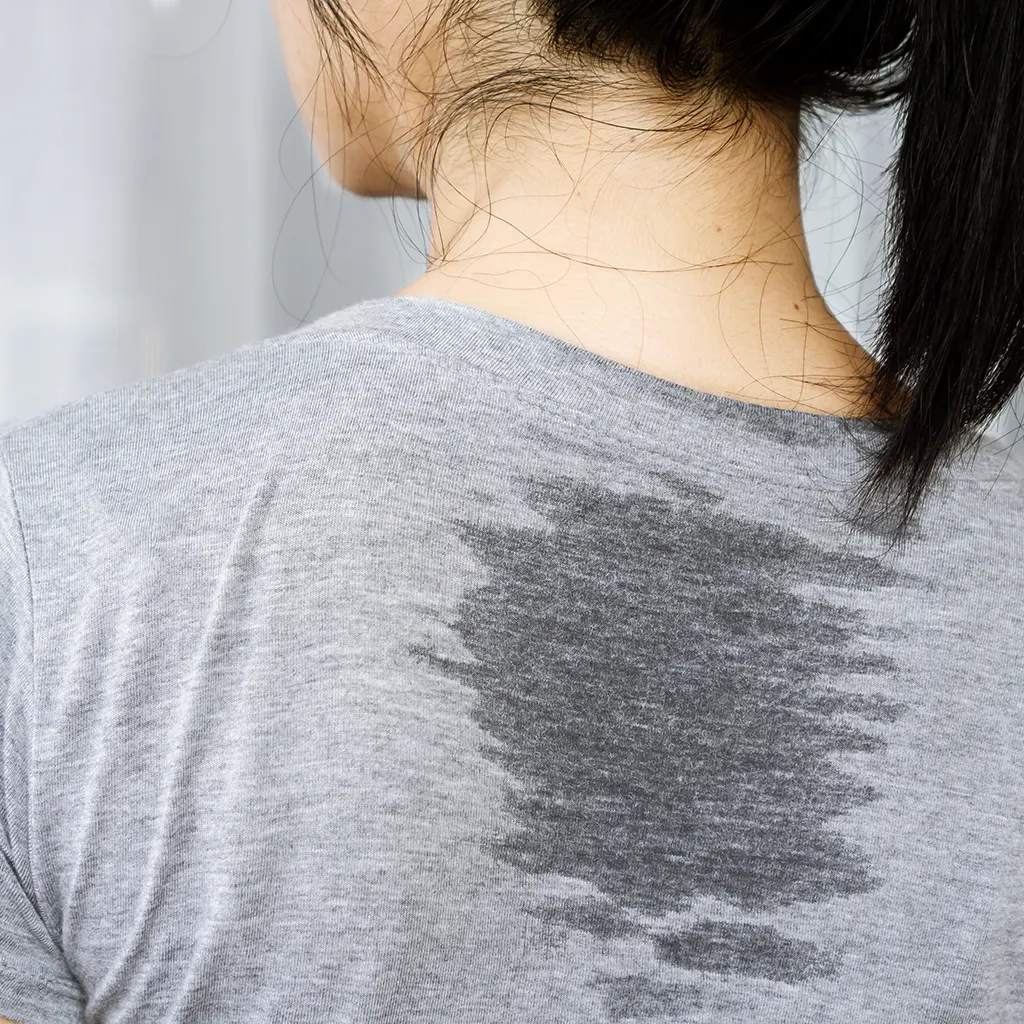
Excessive sweating may be associated with factors such as emotional stimuli, exercise, temperature regulation, medicines and a warm environment.
Underarm hyperhidrosis is not uncommon. It may affect social and professional activities and can have a psychological impact.
The source content notes a hereditary component in some cases. Emotional and thermal stimuli are common triggers, and symptoms typically do not occur during sleep or rest. The condition is uncommon in children and less frequent in older people.
Treatment planning may address both excessive sweating and associated body odour. Topical approaches may include products containing aluminium or zinc salts and other medicines, depending on the assessment.
Surgical approaches such as sympathectomy or removal of sweat glands are not part of the treatment described here.
Underarm hyperhidrosis is not uncommon. It may affect social and professional activities and can have a psychological impact.
The source content notes a hereditary component in some cases. Emotional and thermal stimuli are common triggers, and symptoms typically do not occur during sleep or rest. The condition is uncommon in children and less frequent in older people.
Treatment planning may address both excessive sweating and associated body odour. Topical approaches may include products containing aluminium or zinc salts and other medicines, depending on the assessment.
Surgical approaches such as sympathectomy or removal of sweat glands are not part of the treatment described here.
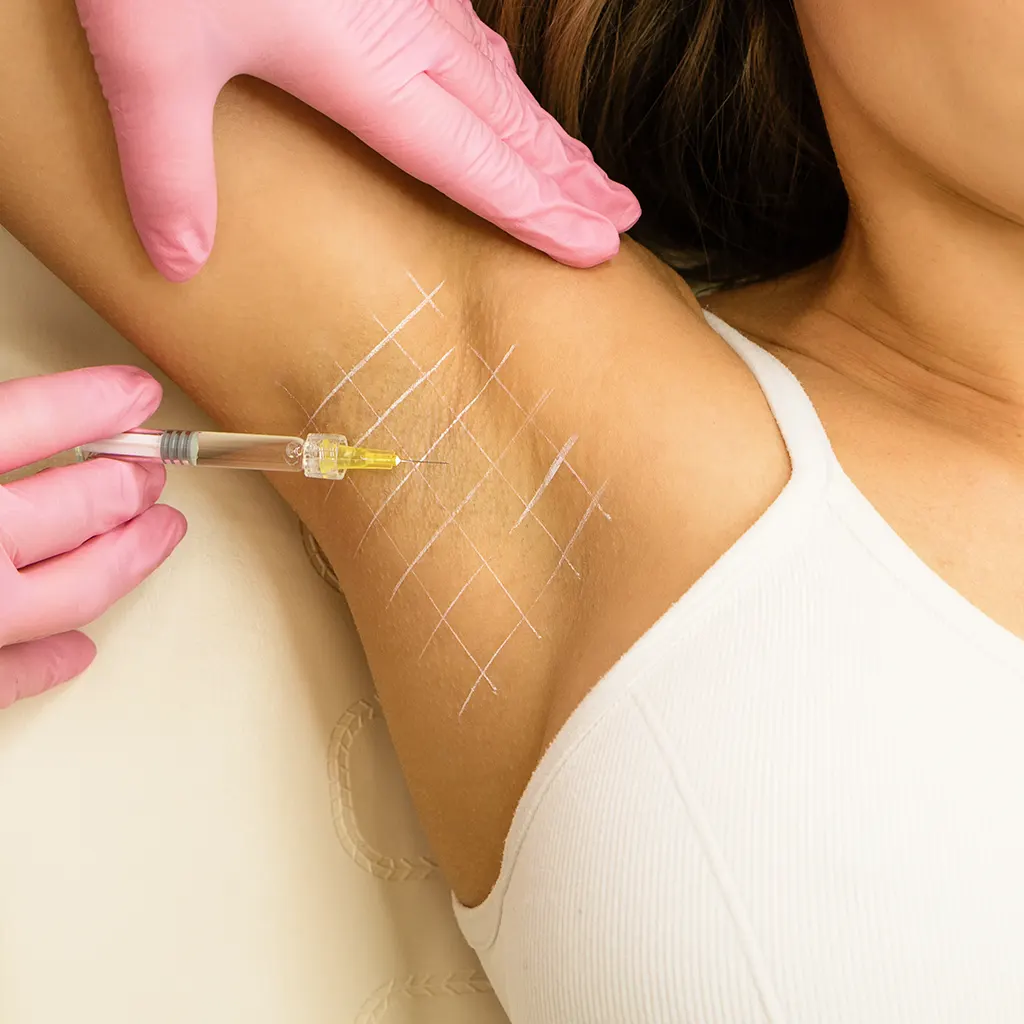
Hyperhidrosis Treatment
Botulinum toxin (Botox or Dysport) is used in selected cases. Its local action affects nerve signalling to the sweat glands.
The source content describes an effect lasting approximately 6–8 months. Repeat treatment may therefore be considered once or twice a year, depending on the area and the individual response.
Contact the clinic for information and an individual medical assessment for hyperhidrosis.
The source content describes an effect lasting approximately 6–8 months. Repeat treatment may therefore be considered once or twice a year, depending on the area and the individual response.
Contact the clinic for information and an individual medical assessment for hyperhidrosis.
Frequently Asked Questions
What is hyperhidrosis?
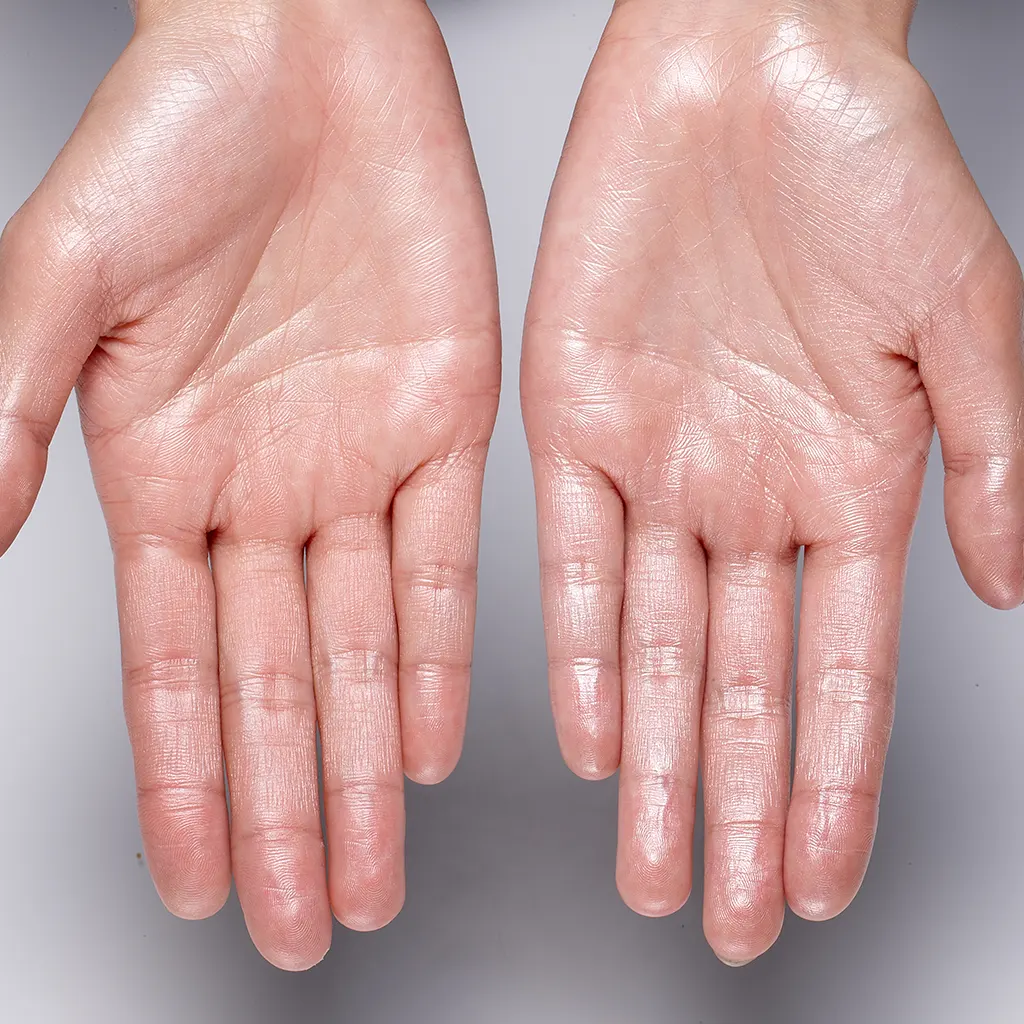
Hyperhidrosis is excessive sweating, most commonly affecting the underarms, palms and soles. It may be primary or associated with medicines, stress, temperature or other factors.
Which areas are most commonly affected by hyperhidrosis?
The underarms are commonly affected, followed by the palms and soles. The face or torso may be affected less frequently.
How may hyperhidrosis affect daily life?
Excessive sweating may affect confidence, clothing choices, social activity and work. The impact and possible contributing factors are assessed individually.
How may botulinum toxin be used for hyperhidrosis?
Botulinum toxin may be injected into selected areas to reduce nerve signalling to the sweat glands. Suitability is determined after a medical assessment.
Is botulinum toxin treatment uncomfortable?
A fine needle is used. A topical anaesthetic cream may be considered for sensitive areas according to individual needs.
Does treatment need to be repeated?
The effect is temporary. The source content describes repeat treatment once or twice a year, depending on the area and individual response.
Is there a permanent treatment for hyperhidrosis?
The treatment described has a temporary effect. Available approaches and expected duration are discussed during the individual medical assessment.
Is hyperhidrosis treatment available in central Thessaloniki?
The clinic in central Thessaloniki provides assessment and botulinum toxin treatment for selected cases of hyperhidrosis using an individualised approach.
How is hyperhidrosis treatment planned?
Planning is based on the area, its extent and the needs of each person following an individual medical assessment.
When may the effect become visible?
The source content describes initial changes within 2–5 days, with the effect developing further over 10–14 days after treatment.
Would you like to discuss which option is suitable for you?
The right indication and a personalised treatment plan are determined after medical assessment.