Blog • Medical Insights
Facial Threads: Application and Treatment Planning
Facial threads are one of the available minimally invasive approaches for the face. The application aims to improve firmness and the contour of the face and neck, with planning tailored to each person.
What Are Facial Threads?
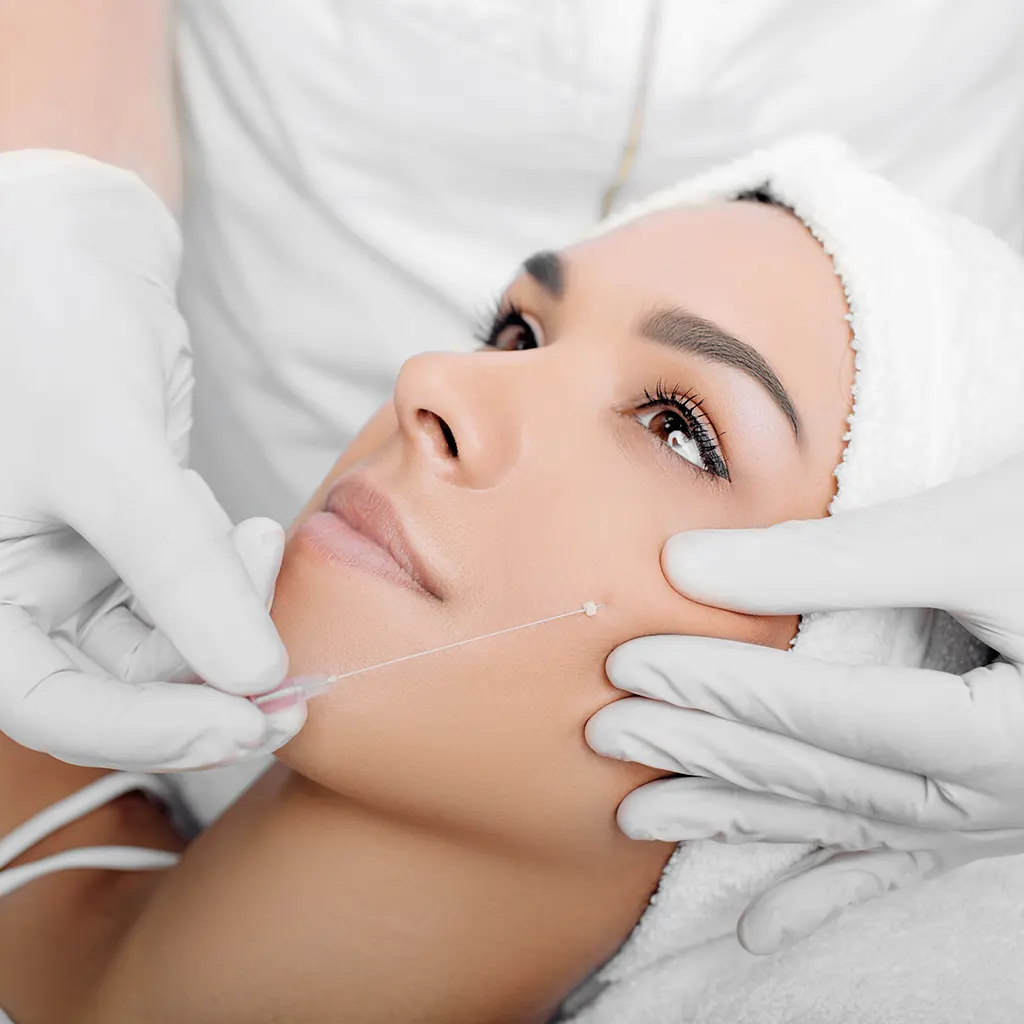
Facial threads are absorbable sutures made from biodegradable materials such as polydioxanone (PDO) and poly-L-lactic acid (COG-PLLA). They create a supportive structure within the tissues and are used with the aim of improving firmness and contour. COG threads contain small barbs and may be used in areas such as the cheekbones, facial contour and neck. Suitability and expected progression are assessed individually.
Application Procedure
Facial threads are applied in the clinic using local anaesthesia. They are introduced with fine needles or cannulas according to thread type and treatment area. The procedure takes approximately 30–60 minutes, depending on the number of threads and areas treated.
Characteristics of Facial Thread Treatment
- Progression of results: response and changes in skin appearance vary from person to person.
- Non-surgical approach: general anaesthesia and surgical incisions are not required.
- Recovery: return time and temporary reactions vary according to the application and the individual.
- Collagen response: gradual thread absorption and collagen-related processes may support a natural-looking change.
Treatment Areas
Facial threads may be used in areas such as:
- Cheekbones
- Facial contour
- Neck
- Eyebrows
- Nasolabial folds
Duration of Results
Results may last approximately 12–24 months, depending on thread type, treatment area and individual skin characteristics. Progression and duration vary from person to person.
Possible Side Effects and Contraindications
Temporary swelling, redness or bruising may occur. Active skin infections, autoimmune conditions or blood-clotting disorders may affect suitability. Medical history should be discussed with the plastic surgeon before treatment.
Individual Assessment
Facial threads are one of the available minimally invasive approaches for skin laxity. Suitability, response, recovery and the progression of results vary from person to person.
The doctor assesses individual needs, determines the treatment protocol and provides follow-up instructions.
The doctor assesses individual needs, determines the treatment protocol and provides follow-up instructions.
Useful information
Frequently asked questions
How long do facial-thread results last?
Results may last approximately 12–24 months, depending on thread type, treatment area and individual skin characteristics.
What does facial-thread treatment feel like?
Local anaesthesia is used. Sensation varies and may include pressure or pulling.
What is the difference between PDO and COG threads?
PDO threads are used for mild tightening and collagen-related support, while barbed COG threads provide greater mechanical lifting and may be used in areas such as the facial contour and neck. Selection depends on medical assessment.
Which facial areas may be treated with threads?
Threads may be applied to the cheekbones, facial contour, nasolabial folds, neck and eyebrows, depending on individual assessment.
What are the possible side effects of facial threads?
Temporary swelling, bruising or redness may occur. Suitability, possible reactions and aftercare are discussed with the doctor before treatment.
How do facial threads differ from a facelift?
Facial threads are a non-surgical approach without incisions and generally involve a shorter recovery period, while a facelift is surgery. The appropriate option is determined after medical assessment.
Would you like to discuss which option is suitable for you?
The right indication and a personalised treatment plan are determined after medical assessment.