Non-surgical Treatment
Thread Lift for the Face and Body
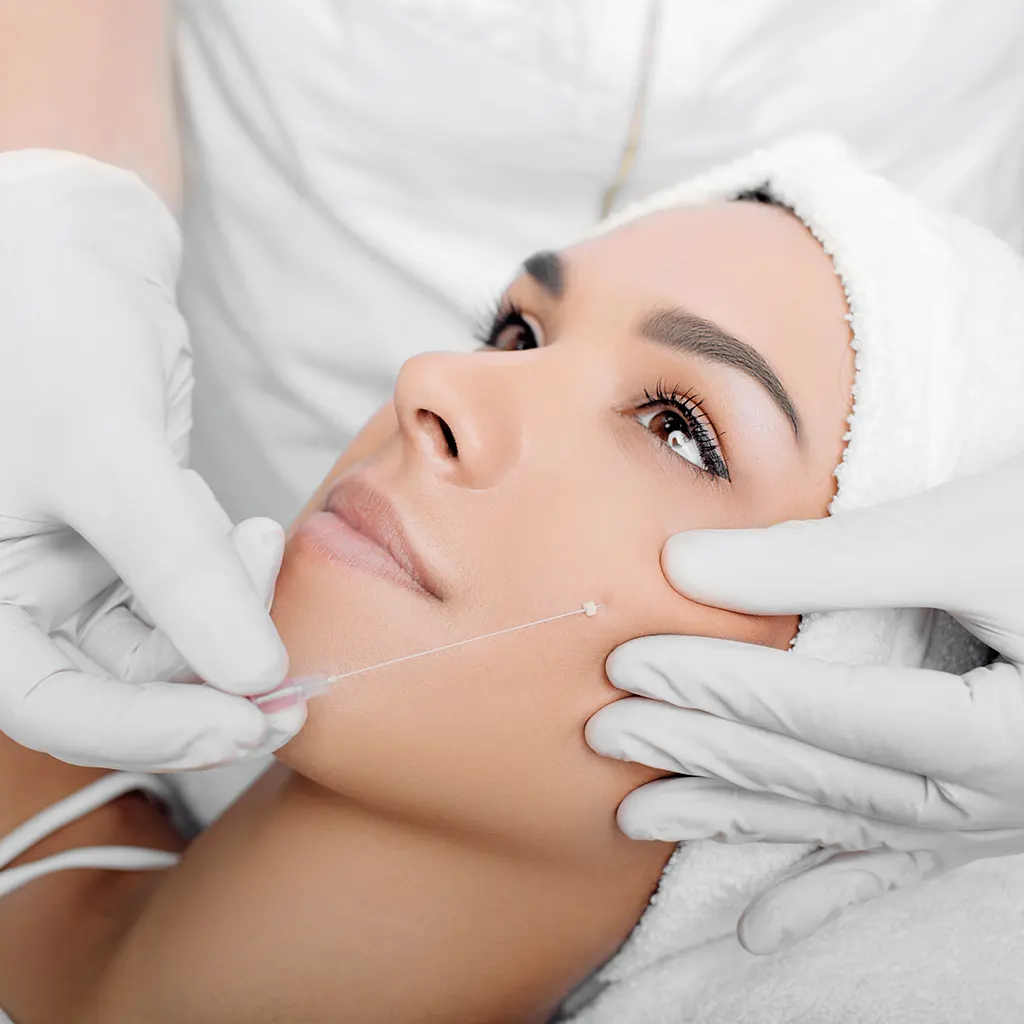
A thread lift with PDO or PLLA threads is a non-surgical approach for selected areas of facial or body laxity. Absorbable threads are placed beneath the skin according to an individualised treatment plan.

Over time, the production of collagen and elastin decreases and skin laxity may become more noticeable. Thread lifting is a non-surgical option for selected cases.
What Are the Threads Made Of?
Threads are made of PDO (polydioxanone) or PLLA (poly-L-lactic acid), materials that have been used in medical practice for many years.
PDO and PLLA threads are certified medical devices (CE) and are fully absorbable.

Is the Procedure Painful or Uncomfortable?
The procedure is performed under local anaesthesia at the thread entry points. It usually takes 30–40 minutes, and hospital admission is not required.

How Long Do the Results Last?
The effect of a PDO or PLLA thread lift may be visible immediately after placement and may continue to develop as the threads stimulate collagen production. PDO threads are absorbed over approximately six months, while PLLA threads may take up to 18 months to be absorbed.
The source content describes an effect lasting approximately 6–12 months with standard PDO threads and approximately 18–24 months with standard PLLA threads.

What Are APTOS Threads?
APTOS threads are placed in the same tissue plane as other lifting threads and are designed to provide mechanical support while also stimulating collagen production.

Face Lift and Body Lift with Threads
APTOS threads are described in the source content as FDA-cleared medical devices and fourth-generation materials. Their design aims to provide tissue support while the material is gradually absorbed. They may be used on the face, neck and selected body areas.
Suitability, the number of threads and the placement plan depend on the area, the degree of laxity and the desired correction. A medical assessment is required before treatment. The technique is performed by plastic surgeon Andreas Moutsoudis, who is trained and certified in the APTOS technique.
Contact us for further information about thread lifting and an individual assessment.

You May Also Be Interested In
More information and useful content related to this treatment.
Frequently Asked Questions
What is a thread lift?
It is a non-surgical technique for selected areas of the face or body. Absorbable threads are placed beneath the skin to provide tissue support.
What are the threads made of?
The threads are made of PDO (polydioxanone) or PLLA (poly-L-lactic acid), materials that have been used in medical practice for many years.
Is the procedure painful?
Local anaesthesia is used at the thread entry points. The procedure lasts approximately 30–40 minutes and hospital admission is not required.
How long do the results last?
The source content describes approximately 6–12 months for PDO threads and up to 18–24 months for PLLA threads. Duration also depends on skin characteristics and the degree of laxity.
When are the results visible?
Tissue support may be visible immediately after treatment and may continue to develop as collagen production is stimulated.
What are APTOS threads?
APTOS threads are specialised threads designed to provide tissue support and stimulate collagen production. The appropriate thread type is selected after assessment.
Can I return to my activities immediately?
Return to daily activities is generally prompt. Mild local irritation or swelling may occur and usually settles within a short period.
Which areas may be treated with threads?
Threads are mainly used on facial areas such as the cheeks, facial oval, jawline and neck, and may also be considered for selected body areas with laxity.
Are there side effects or risks?
The technique uses biocompatible, absorbable threads. Suitability, possible side effects and risks are discussed during the medical assessment.
Who performs the treatment at the clinic?
The procedure is performed by plastic surgeon Andreas Moutsoudis, who is trained and certified in the APTOS technique.
Would you like to discuss which option is suitable for you?
The right indication and a personalised treatment plan are determined after medical assessment.