Blog • Medical Insights
Fractional CO₂ Laser: Skin Resurfacing and Rejuvenation
What Is Fractional CO₂ Laser and How Does It Work?
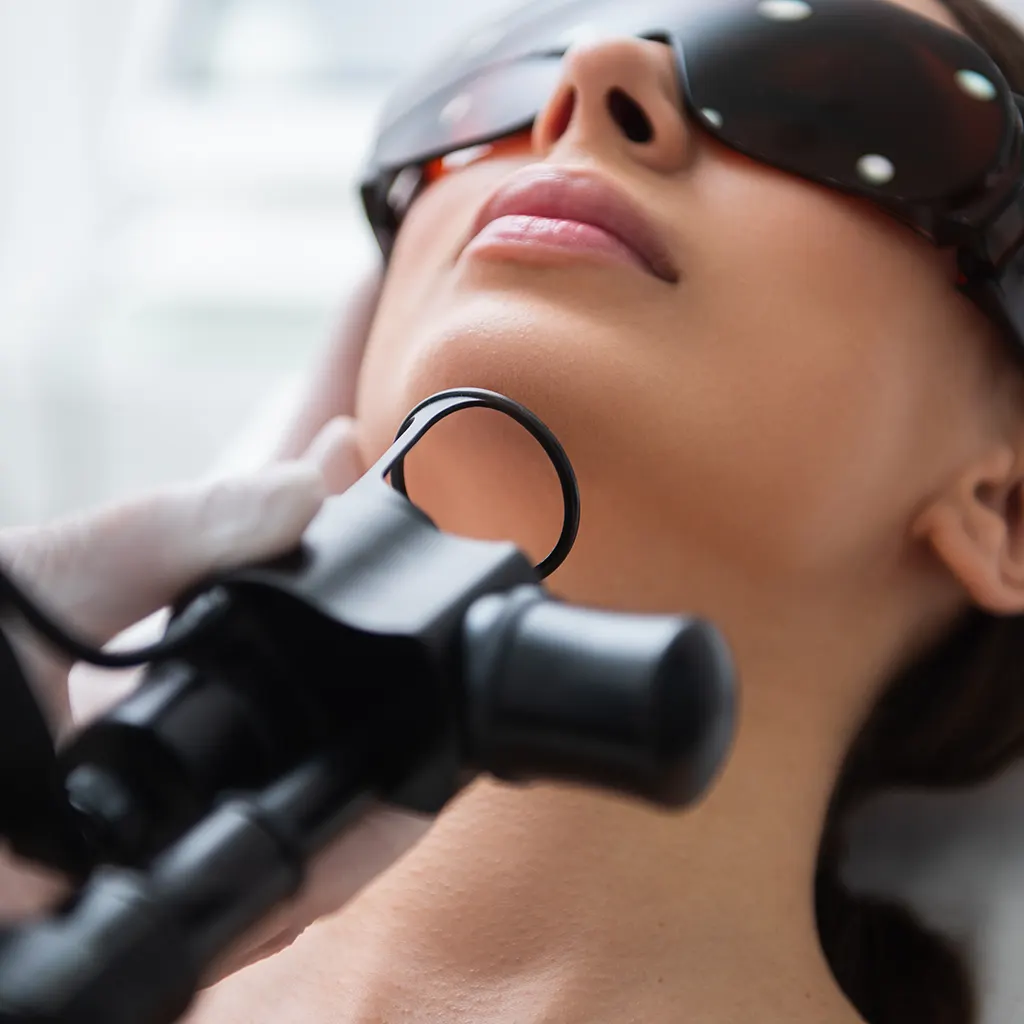
The CO₂ laser emits at 10,600 nm and its primary chromophore is water. In fractional mode, it delivers energy in microscopic thermal columns, known as Microscopic Treatment Zones (MTZ), leaving intervening areas of skin untreated.
The controlled thermal action activates healing and collagen-remodelling processes. The aim is a gradual improvement in texture, pores and the appearance of fine lines, depending on treatment intensity and skin characteristics.
Treatment Areas and Indications
Fractional CO₂ Laser may be used as part of an individual treatment plan to improve skin texture and overall appearance.
- Wrinkles and fine lines: it may be applied to areas such as the upper lip, forehead and around the eyes.
- Acne scars and uneven texture: the aim is to gradually improve the depth and appearance of scars.
- Photoageing: it may help improve a dull or rough appearance associated with long-term sun exposure.
- Pigmentation irregularities and spots: it may form part of a plan to improve colour uniformity.
- Mild skin laxity: activation of collagen production may support improved firmness.
- Overall rejuvenation: the aim may be to improve skin texture and radiance.
Response varies according to the indication, treatment area, skin phototype and treatment parameters.
How Suitability Is Assessed
Suitability for Fractional CO₂ Laser is assessed based on the indication, skin phototype, skin condition, medical history and available recovery time.
The treatment may be considered for fine lines, acne scars, signs of photoageing, unevenness or rough texture.
Treatment parameters and depth are determined individually. Sensitive skin or darker skin phototypes require particular assessment and adjustment of the protocol.
Preparation Before Treatment
Preparation is determined by the doctor according to the skin, medical history and treatment area.
- Sun and sunbeds: avoiding sun and sunbeds for approximately 2–4 weeks before treatment may be recommended, depending on the condition of the skin and the doctor’s instructions.
- Retinol or acids: temporary discontinuation 3–5 days beforehand may be requested, in accordance with the doctor’s instructions.
- History of cold sores: this should be disclosed so that the need for preventive antiviral medication can be assessed.
- Isotretinoin or other medication: these should be disclosed before treatment, as a waiting period after discontinuation may be required.
- Photosensitising supplements: their use should be discussed with the doctor.
- Skin prone to pigmentation changes: specific preparation may be recommended before treatment.
Instructions may vary from case to case and should be followed as provided by the treating doctor.
What to Expect on the Day of Treatment
-
Before the session
The skin is cleansed and an anaesthetic cream may be applied. Air cooling may be used for larger areas. Parameters are adjusted according to the area and the skin’s needs. -
During treatment
The session may last approximately 20–60 minutes, depending on the area and intensity. Sensations may include warmth or small pinpricks and vary from person to person. -
Immediately afterwards
Redness, mild swelling and microscopic brown dots may appear. Their intensity and duration vary according to the protocol and the skin’s response.
Instructions for the day of the appointment:
- The skin should be clean, without make-up or creams.
- Strenuous exercise and very hot environments should be avoided on the same day.
- For sensitive skin, appropriate cooling and care options are discussed with the doctor.
Recovery & Indicative Healing Timeline
Recovery varies according to treatment intensity, area and skin type. The following timeline is indicative.
Day 0 – Immediately after treatmentRedness and a sensation of warmth may occur. Instructions regarding cooling, moisturising and sleeping position should be followed.
Days 1–2 – Early recoverySwelling may begin to subside and the skin may take on a darker or bronzed appearance. Cleansing should be gentle and moisturising should be maintained.
Days 3–5 – PeelingSmall crusts or peeling may occur. They should not be removed mechanically.
Days 5–7 – Gradual returnRedness usually subsides gradually. The use of make-up and other products should follow the doctor’s instructions.
Weeks 2–6 – Changes in the skin’s appearanceTexture and uniformity may change gradually. Photoprotection and moisturising should be maintained.
Months 3–6 – Collagen remodellingThe remodelling process may continue for several months. Progress is assessed at follow-up.
As a guide, social downtime may be approximately 5–7 days and overall recovery 10–21 days. These timeframes are not the same for everyone and depend on treatment intensity and the skin.
Note: If a reaction causes concern, contact the treating doctor.
After Treatment: Care Instructions
Care after the session is adjusted to treatment intensity and the needs of the skin.
-
1. Gentle cleansing
Use a mild cleanser without alcohol or fragrance, and avoid rubbing, hot water and sponges.
-
2. Moisturising
Healing or moisturising products are applied according to the doctor’s instructions; depending on the product, application 2–3 times a day may be recommended.
-
3. Protection from irritation
If there is a history of cold sores, antiviral prophylaxis may be recommended. Additional topical-treatment instructions may be provided if considered necessary.
-
4. Avoiding aggravating factors
During the first few days, avoid strenuous exercise, perspiration, saunas, steam rooms, swimming pools, hot tubs and active cosmetics containing acids, retinoids or alcohol.
-
5. Sun protection
Use SPF 30+ sunscreen according to the doctor’s instructions. When outdoors, sun protection should be reapplied in accordance with those instructions; as a guide, reapplication every 2–3 hours may be required.
Note: Mild products are preferred during the first few days, and make-up is avoided until the skin has settled. This period may be approximately 5–7 days, depending on the treatment.
How Many Sessions May Be Needed and When Progress Is Assessed
The number of sessions depends on the indication, intensity and the skin’s response. As a guide, 1–3 sessions approximately 4–8 weeks apart may be recommended.
Progress is assessed gradually over the following weeks and months as collagen remodelling continues.
Depending on the case, a repeat treatment or combination with another application may be considered after reassessment.
Indicative assessment timeline:
- The first changes in appearance may be assessed within 1–2 weeks.
- Changes in texture and scars may continue for 2–3 months.
- Collagen remodelling may continue for up to approximately 6 months after the final session.
Note: Timeframes are indicative and progress varies from person to person.
Treatment Aims
The aim of treatment may be the gradual improvement of skin texture, uniformity and overall appearance.
- Improvement in texture and firmness.
- Reduction in the appearance of fine lines and pores.
- Improvement in the appearance of acne scars and signs of photoageing.
- Support for a more even tone and greater radiance.
The extent and duration of improvement vary according to the indication, skin, treatment plan and aftercare.
Risks & Possible Adverse Effects
As with any medical treatment, Fractional CO₂ Laser may be accompanied by temporary reactions or complications. Assessment, selection of parameters and aftercare form part of the treatment plan.
- Redness and swelling: these may occur after treatment and their duration varies.
- Crusting or peeling: these may occur during recovery and should not be removed mechanically.
- Reactivation of HSV-1: antiviral prophylaxis may be considered where there is a relevant history.
- Post-inflammatory hyperpigmentation: the risk is assessed particularly in darker skin phototypes.
- Other complications: these may include prolonged irritation or changes in healing and require medical assessment.
Note: Instructions before and after treatment, disclosure of medication and photoprotection should be followed in accordance with the doctor’s advice.
Comparison with Other Fractional Technologies
Fractional technologies differ in their depth of action, intensity and recovery time. Selection depends on skin phototype, indication and available recovery time.
Fractional CO₂ Laser (Ablative)
- Used for deeper resurfacing.
- The thermal action reaches deeper layers and activates collagen-remodelling processes.
- As a guide, 1–3 sessions may be recommended, with a recovery period of approximately 5–7 days depending on intensity.
Er:YAG & Non-Ablative Fractional
- They act more superficially, with the aim of improving texture and radiance.
- They may involve milder recovery, indicatively around 1–2 days, but may require more sessions.
- Their suitability is assessed according to skin phototype and the desired treatment intensity.
The type of laser is selected by the doctor according to skin phototype, the type of wrinkles or scars, available recovery time and the aim of treatment.
Note: In some cases, a combination with PRP, peels or microneedling may be planned at a different time and following assessment.
Combination Approaches
Fractional CO₂ Laser may form part of an individual plan alongside other applications when considered appropriate.
- Peels or hydration treatments: these may be considered after recovery is complete.
- Microneedling or subcision: these may be used in plans for acne scars, depending on scar type.
- Individual timing: combinations are planned by the doctor and applied at appropriate intervals.
Indicative Protocols & Expectations
Intensity, frequency and number of sessions are determined according to the area, indication and the skin’s response. The following protocols are indicative and are adjusted according to the indication, area and skin response.
Upper-lip wrinkles and the area around the eyes
- 1–2 higher-intensity sessions, or
- 2–3 milder sessions, depending on wrinkle depth and skin type.
Social downtime may be approximately 5–7 days.
Acne scars and uneven texture
- 2–3 sessions at intervals of 4–8 weeks.
- Reassessment at approximately 3 months.
Improvement is gradual and its extent or duration varies. Care and photoprotection form part of the overall plan.
Medical Information – Disclaimer
The information on this page is for educational purposes and does not constitute a medical diagnosis or replace an individual assessment.
Suitability for treatment, treatment parameters and the care protocol are determined by the treating doctor based on each person’s needs and medical history.
Useful information
Frequently asked questions
Is Fractional CO₂ Laser painful?
When can I return to work?
Will the skin peel?
Is prophylaxis needed for cold sores?
Can I have CO₂ Laser treatment while taking isotretinoin?
How many sessions are needed and when are results visible?
What determines how long the improvement lasts?
Would you like to discuss which option is suitable for you?
The right indication and a personalised treatment plan are determined after medical assessment.