
Non-surgical Treatment
Fractional CO₂ Laser
Fractional CO₂ laser is used for selected skin concerns on the face and body, including texture irregularities, scars and signs of photoageing. Treatment depth and session planning are tailored to the area and the individual assessment.
What Is the Procedure?
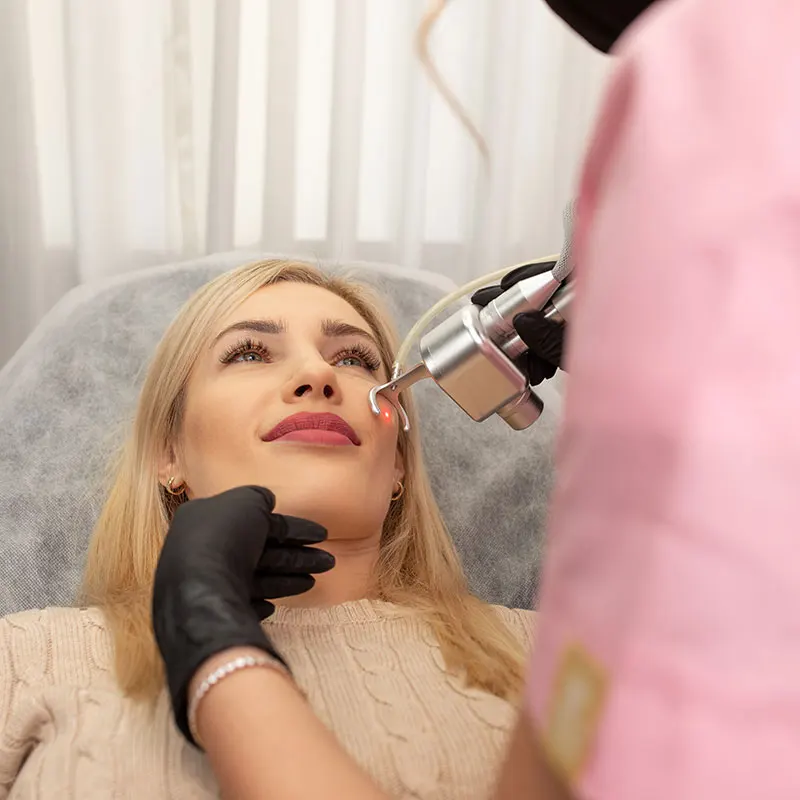
A medical assessment is performed first and a topical anaesthetic cream is then applied to the area.
Skin preparation with a peeling treatment may be recommended two weeks before the session. The source content describes 2–4 sessions at intervals of approximately one month, depending on the treatment plan.
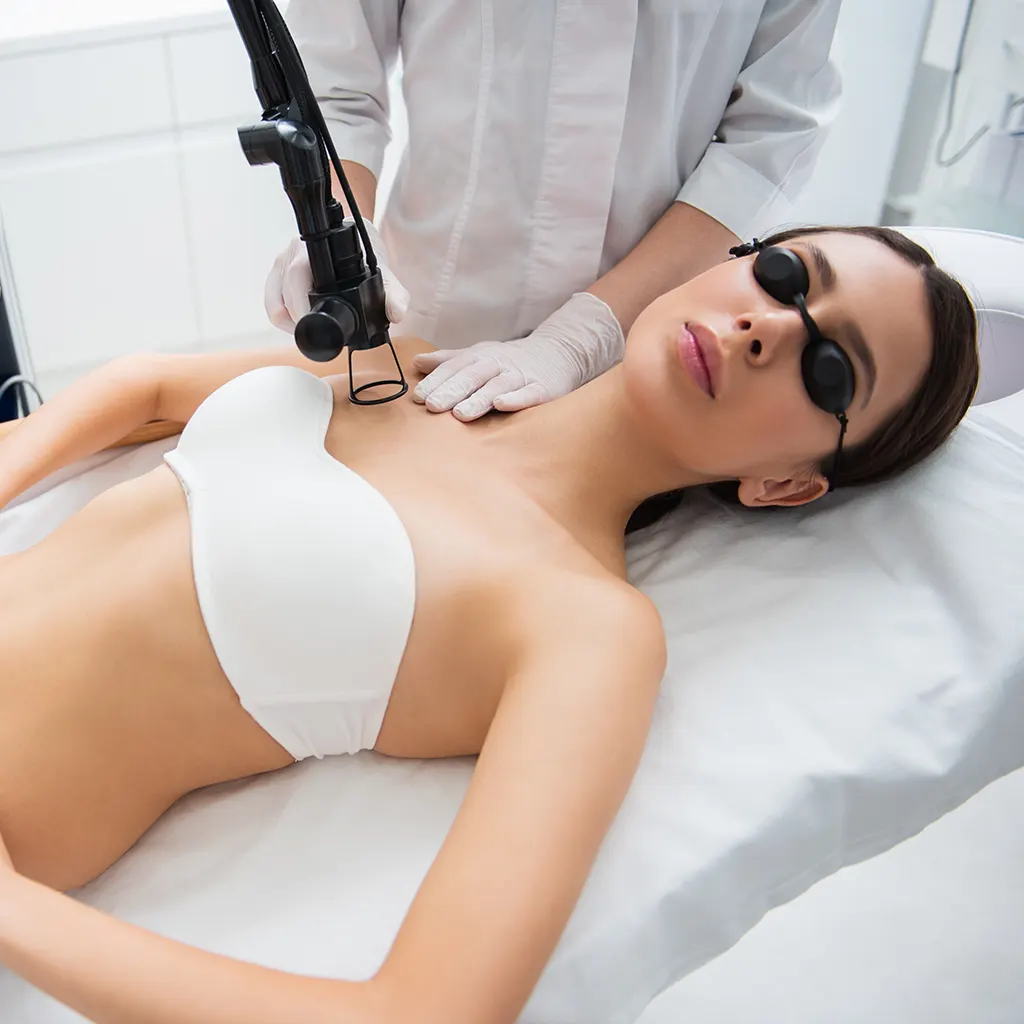
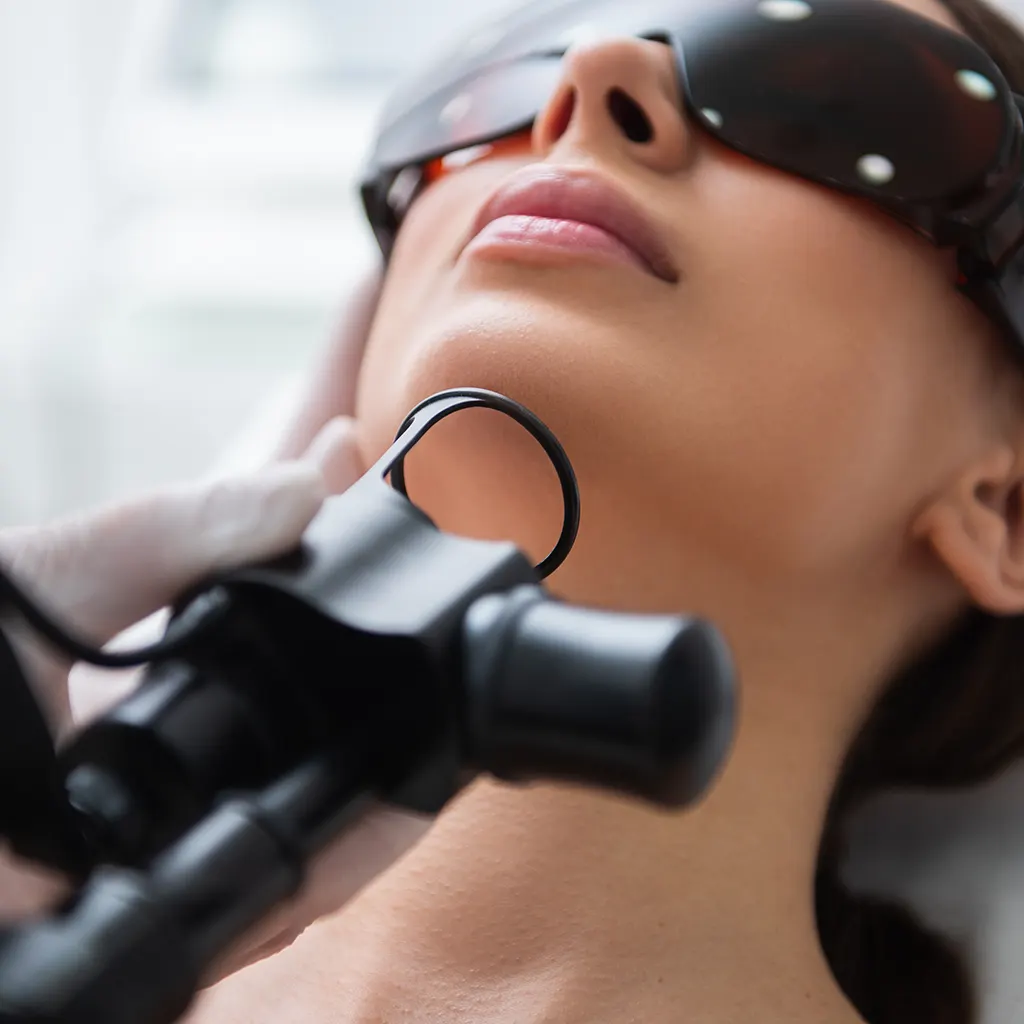
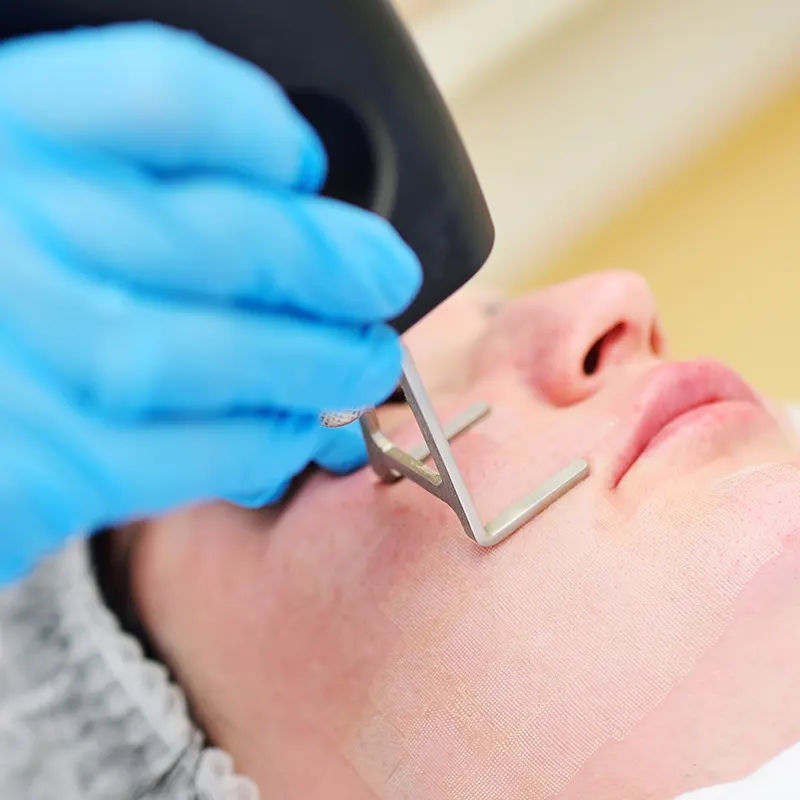
The laser application takes approximately 30 minutes. The depth of treatment is adjusted by the practitioner according to the indication and the area treated.
Skin preparation with a peeling treatment may be recommended two weeks before the session. The source content describes 2–4 sessions at intervals of approximately one month, depending on the treatment plan.
The laser application takes approximately 30 minutes. The depth of treatment is adjusted by the practitioner according to the indication and the area treated.
What Happens After Treatment?
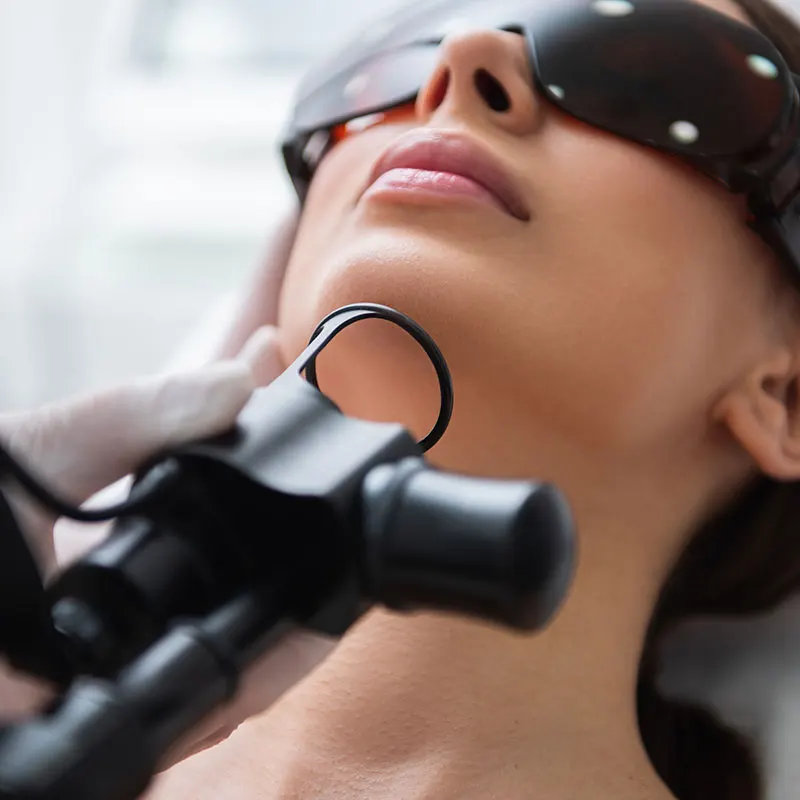
Post-treatment care includes products selected to support the skin barrier. Instructions are provided for cleansing, moisturising and sun protection.
Redness may remain for approximately 24–72 hours, depending on the treatment intensity.
Redness may remain for approximately 24–72 hours, depending on the treatment intensity.

What Should I Consider Before and After Treatment?
The timing and treatment plan take into account sun exposure and the person’s skin characteristics.
Specific preparation and aftercare instructions are provided during the medical assessment.
For fractional laser treatment, the source content notes the importance of sun protection and appropriate aftercare.
Specific preparation and aftercare instructions are provided during the medical assessment.
For fractional laser treatment, the source content notes the importance of sun protection and appropriate aftercare.
Which Treatments May Be Combined with Fractional Laser?
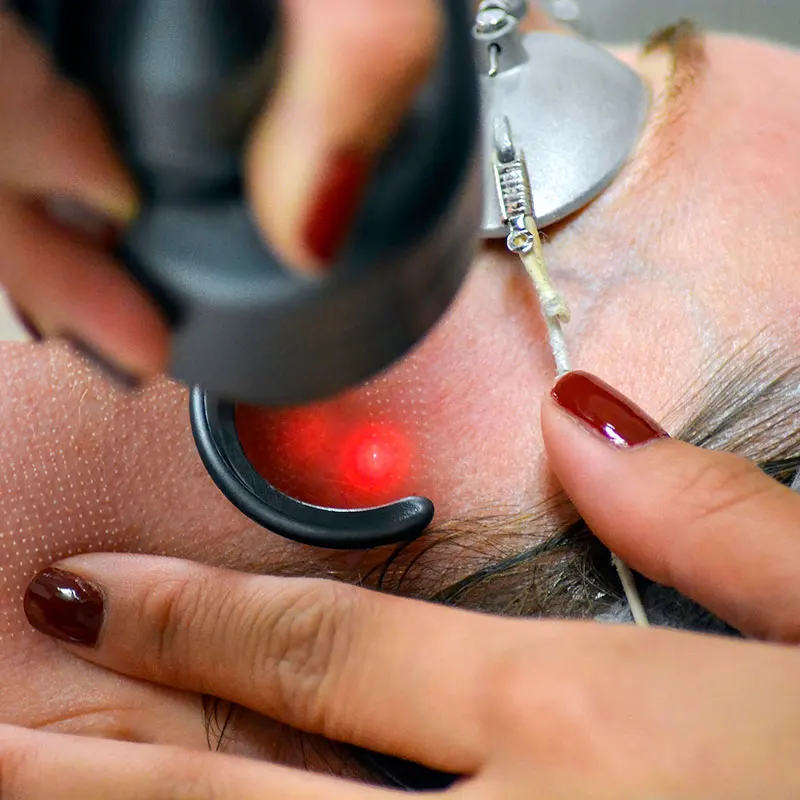
Fractional laser may be combined with autologous mesotherapy (PRP) where appropriate. The sequence is determined by the treatment plan and the individual assessment.
Before or after surgical facial treatment, fractional laser, peeling, hyaluronic-acid mesotherapy, peptides or autologous PRP may be considered as part of a broader plan.
Before or after surgical facial treatment, fractional laser, peeling, hyaluronic-acid mesotherapy, peptides or autologous PRP may be considered as part of a broader plan.
Why Consider Fractional Laser?
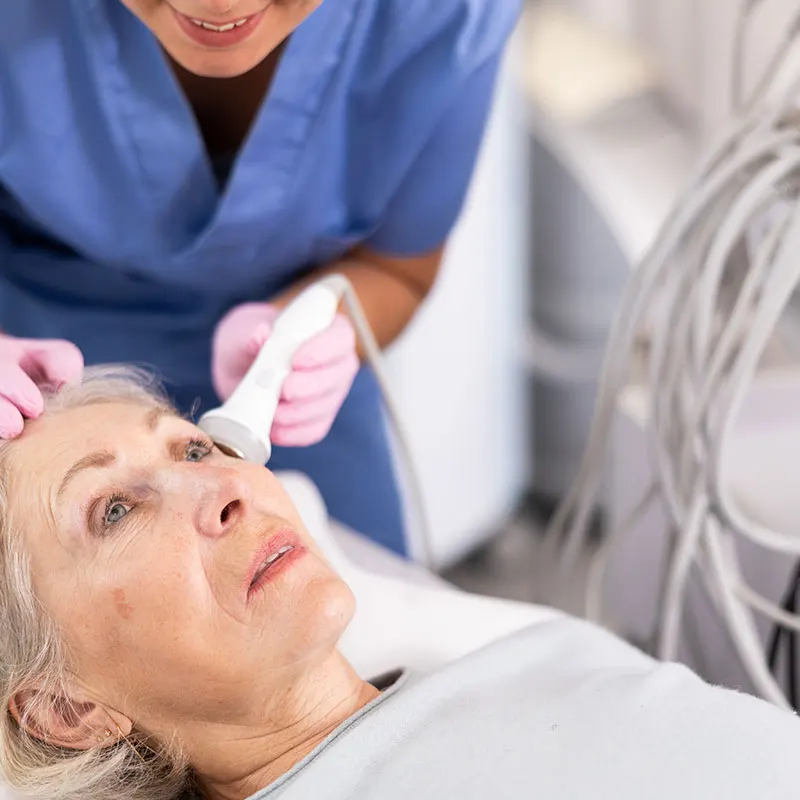
The laser’s interaction with the skin is used to support a controlled renewal response.
Fractional CO₂ laser may be considered for selected concerns involving skin texture, scars and signs of ageing.
The treatment parameters are selected according to the person and the treatment area.
Contact the clinic for information and an individual assessment for fractional CO₂ laser.
Fractional CO₂ laser may be considered for selected concerns involving skin texture, scars and signs of ageing.
The treatment parameters are selected according to the person and the treatment area.
Contact the clinic for information and an individual assessment for fractional CO₂ laser.
Related Videos
Short explanations and answers from Dr. Andreas Moutsoudis.
You May Also Be Interested In
More information and useful content related to this treatment.

Frequently Asked Questions
How many sessions are needed?
The source content describes 1–2 sessions, depending on the extent and type of skin concern, at intervals of approximately one month.
What should I expect after treatment?
Mild redness or swelling may occur and usually settles within 1–3 days. Individual recovery instructions are provided after treatment.
Is fractional CO₂ laser treatment uncomfortable?
A topical anaesthetic cream is used. Mild discomfort may occur during treatment, and return to normal activities depends on the treatment intensity and individual recovery.
How is recovery supported?
Selected healing and moisturising products and sunscreen are used as advised. Aftercare supports skin recovery and protection from sun exposure.
Which treatments may be combined with fractional laser?
Where appropriate, it may be combined with PRP, peeling, fillers or mesotherapy with hyaluronic acid and peptides as part of an individual treatment plan.
How is treatment safety assessed?
Treatment is performed by trained personnel with appropriate equipment. The medical assessment determines suitability, parameters and aftercare.
Why may fractional CO₂ laser be considered?
The controlled fractional treatment is used to stimulate a skin-renewal response and may be considered for texture, lines, scars and other selected concerns.
What treatments may follow fractional laser?
Peeling or mesotherapy may be considered after recovery, or fractional laser may form part of preparation for other aesthetic procedures. Timing is determined by the doctor.
Would you like to discuss which option is suitable for you?
The right indication and a personalised treatment plan are determined after medical assessment.