Blog • Medical Insights
Andreas Moutsoudis at the Panhellenic “Oncology Updates” Conference in Thessaloniki

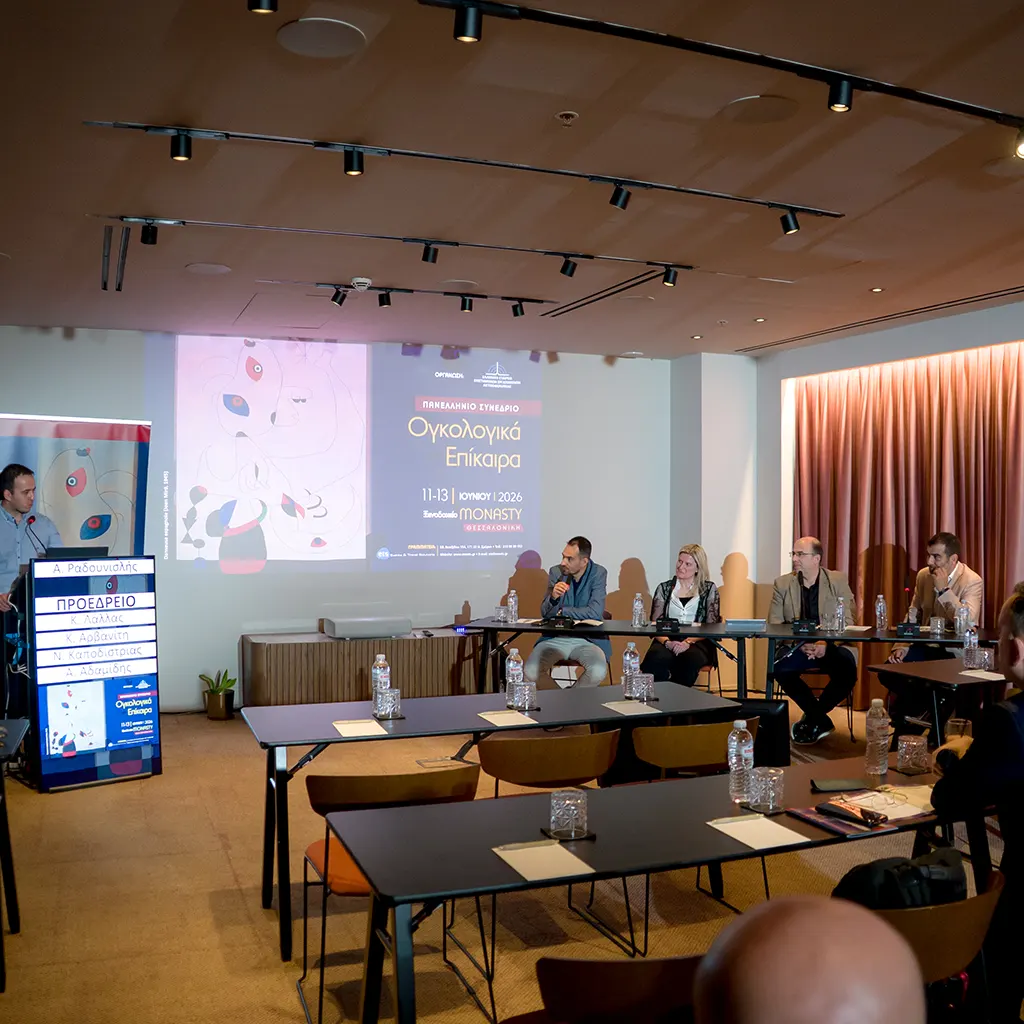
Plastic Surgeon Andreas Moutsoudis, MD, MSc, Scientific Associate of the First University Department of Dermatology at Aristotle University of Thessaloniki, participated in the Panhellenic “Oncology Updates” Conference, held on 11 – 13 June 2026 at the Monasty hotel in Thessaloniki.
Panhellenic “Oncology Updates” Conference
The conference was an important scientific meeting on current developments in oncology, bringing together physicians from different specialties to share knowledge, experience and new findings on cancer prevention, diagnosis and treatment.

Mr Moutsoudis’ participation was connected with the topic of Skin Oncology, an important field concerned with the prevention, early diagnosis and surgical treatment of skin malignancies.
Andreas Moutsoudis’ participation
As part of the conference’s scientific programme, Mr Moutsoudis contributed as a discussant to the round-table session on Skin Oncology, which presented new findings on dermatological oncology, melanoma and high-risk squamous cell carcinoma.
His participation in this session highlights the importance of a multidisciplinary approach to skin cancer care, in which collaboration between dermatologists, plastic surgeons, oncologists and pathologists is essential.
Skin oncology, skin cancer and melanoma
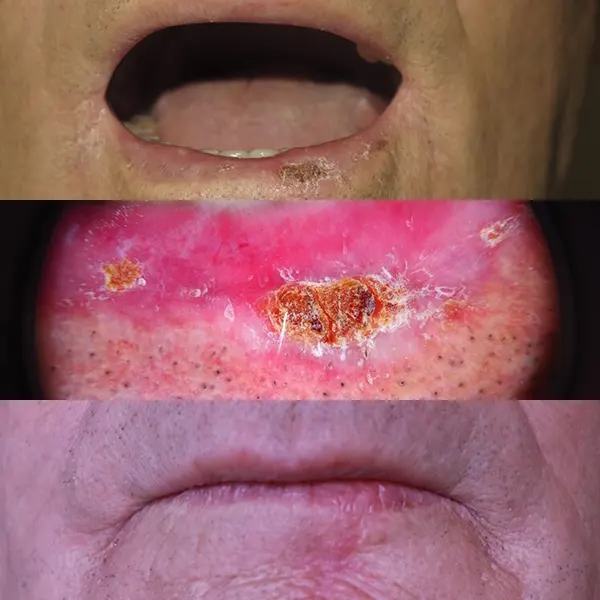
Skin cancer includes different types of lesions, such as basal cell carcinoma, squamous cell carcinoma and melanoma. Melanoma is a form of skin cancer that requires particular attention, early diagnosis and appropriate treatment.
Moles, also known as naevi, may be benign skin lesions, but any change in their colour, size, shape or texture should be assessed by a specialist physician. Mole monitoring and dermoscopy aim to identify changes early and assess suspicious lesions.
When should a mole be checked?
Observing a mole helps identify changes early that need medical assessment. A patient should seek medical assessment if they notice:
- A change in colour or the appearance of several shades.
- An increase in size or a rapid change in the lesion.
- An asymmetrical shape or irregular borders.
- A change in texture, bleeding, discomfort or injury.
The value of prevention
Protection from sunlight and avoidance of sunburn are measures for prevention and risk reduction. Regular skin checks aim to identify changes early and assess suspicious lesions. People with many moles, fair skin or a history of suspicious skin lesions particularly need ongoing monitoring.
Digital mole mapping helps record and compare skin lesions in detail over time, allowing possible changes to be recognised early.
The role of plastic surgery in skin cancer
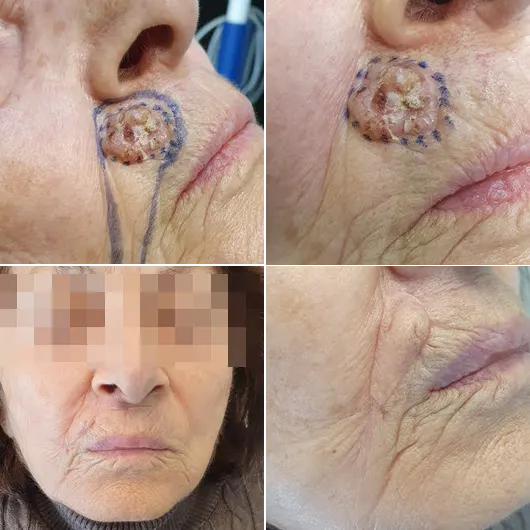
In the management of skin tumours, surgical excision with clear margins is often a key stage of treatment, depending on the type, location and extent of the lesion.
A plastic surgeon’s experience is particularly important in areas where planning takes account of oncological management, function and aesthetic reconstruction, such as the face, eyelids, nose, lips and ears.
Appropriate excision of the lesion and reconstruction of the resulting defect can contribute both to effective treatment and to maintaining a balanced aesthetic and functional result.
The importance of multidisciplinary collaboration
Modern skin cancer management is not limited to a single specialty. It requires combined knowledge from dermatology, plastic surgery, medical oncology, radiation oncology and pathology.
Andreas Moutsoudis’ participation in the “Oncology Updates” conference highlights this collaboration, with the shared aim of improving prevention, diagnosis, treatment and follow-up for patients with skin malignancies.
Skin cancer and mole removal
Early diagnosis is a key factor in the management of skin cancer. If you notice a change in a mole or a new suspicious lesion, prompt medical assessment is important.
Read more about skin cancer and mole removal
Mole checks and medical assessment
Regular mole checks aim to identify changes early and assess suspicious skin lesions.
Contact details: 2312 311 350
Useful information
Frequently asked questions
What is melanoma?
When should a mole be checked?
What is digital mole mapping?
How are skin tumours treated?
Why are regular checks important?
Would you like to discuss which option is suitable for you?
The right indication and a personalised treatment plan are determined after medical assessment.