Blog • Medical Insights
Cellulite Treatment in Thessaloniki

Cellulite is one of the most common aesthetic body concerns, mainly affecting the thighs, buttocks, abdomen and knees. It is not solely related to weight: skin quality, microcirculation, fluid retention, connective tissue structure and hormonal changes also play a role. At the practice of Plastic Surgeon Andreas Moutsoudis, cellulite is addressed through an individualised plan, modern body treatments and combination protocols aimed at a smoother, firmer and more even skin appearance.

At a glance
Cellulite treatment aims to improve the orange-peel appearance, support lymphatic circulation, reduce fluid retention and improve skin elasticity. Depending on the body's condition, it may be combined with skin-tightening treatments, lymphatic massage, fat-dissolving treatments or other non-invasive body treatment protocols.
The appropriate protocol is selected after an individual assessment, so that the programme can be tailored to each person's body.
What is cellulite?
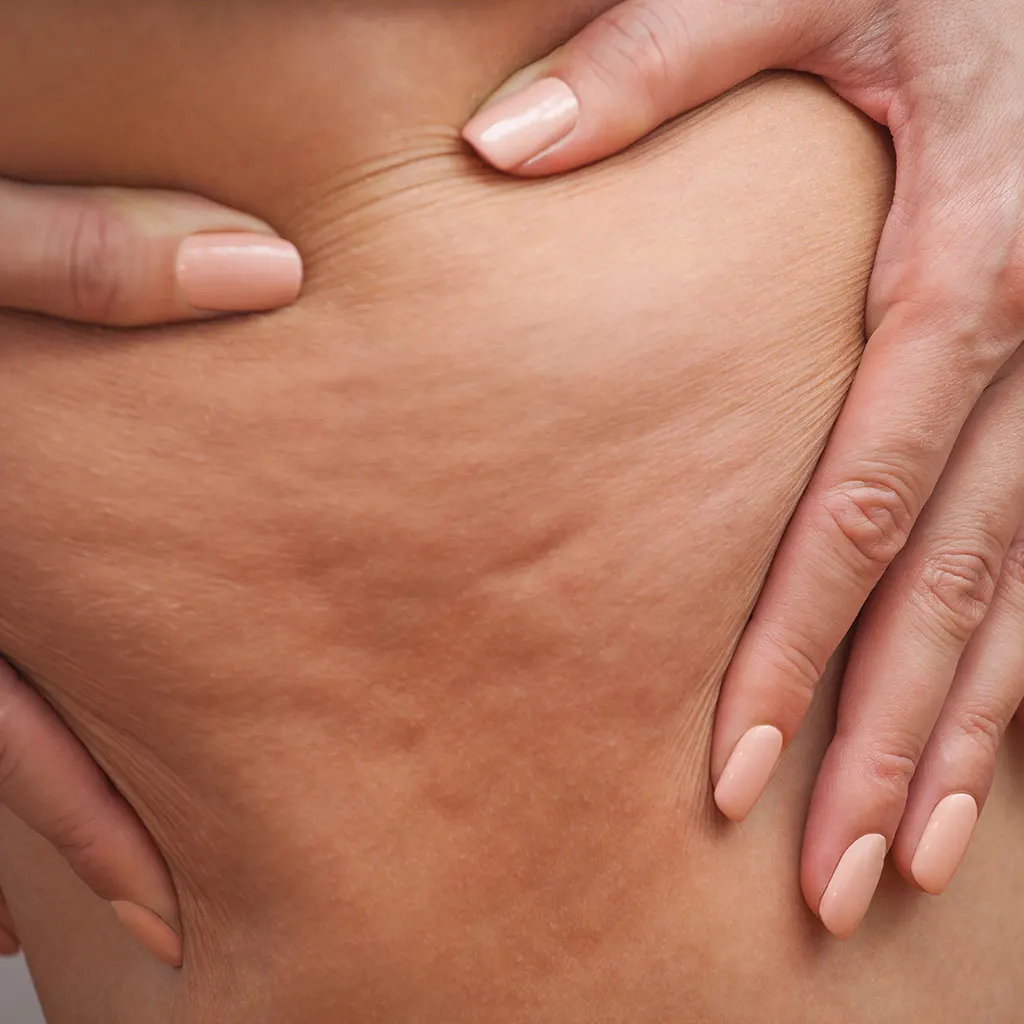
Cellulite is an uneven skin appearance often described as "orange peel". It develops when subcutaneous fatty tissue and fibrous bands of connective tissue affect the skin surface, creating small depressions, ripples or irregularities.
It is very common, particularly in women, and can occur even in people of normal weight or with a good level of fitness. For this reason, cellulite treatment should not be viewed simply as "slimming", but as an overall approach to improving skin quality and local circulation.
Where does cellulite most commonly occur?
Cellulite is most common in areas with a greater tendency towards fluid retention, laxity or localised fat accumulation.
- Thighs: inner and outer surfaces.
- Buttocks: unevenness and laxity in the area.
- Abdomen: fluid retention, laxity and localised fat.
- Knees: mild local laxity or skin irregularity.
What contributes to cellulite?
Cellulite is multifactorial. This means that it does not have a single cause, but involves a combination of factors that affect its appearance. Proper assessment helps guide the treatment plan.
Main factors
- Hormonal changes.
- Heredity and body type.
- Fluid retention and poor microcirculation.
- Reduced skin elasticity.
Factors that can worsen it
- A sedentary lifestyle and lack of muscle tone.
- Weight fluctuations.
- Poor diet, excessive salt or processed foods.
- Inadequate hydration and poor sleep quality.
Degrees of cellulite
The severity of cellulite varies from person to person. It can be mild, moderate or more pronounced, which affects the number of sessions and the combination of treatments needed.
- Mild cellulite: visible mainly when the skin is compressed.
- Moderate cellulite: visible when standing or under certain lighting.
- Pronounced cellulite: deeper depressions and a more uneven appearance.
Can cellulite disappear completely?
Cellulite treatment does not mean "permanent elimination" for everyone. The realistic aim is a noticeable improvement in appearance, reduced unevenness, better skin texture and improved firmness.
Treatment may be supported by a balanced diet, hydration, physical activity and periodic maintenance, particularly when fluid retention or laxity is present.
How is cellulite treated?
Cellulite treatment is individually planned according to the area, the degree of cellulite, skin laxity, fluid retention and the patient's goals. A combination of body treatments is often proposed for a more comprehensive result.
PRCell 2G and non-invasive body improvement
PRCell 2G is used in areas with cellulite, fluid retention or uneven skin, aiming to improve microcirculation, lymphatic flow and skin texture.
Combining treatment with body skin tightening
When cellulite is accompanied by laxity, treatment may be combined with body skin-tightening protocols to improve both unevenness and firmness in the area.
Lymphatic massage
Lymphatic massage may help with fluid retention, swelling and a feeling of heaviness in the legs, supporting the overall approach to cellulite treatment.
Combination protocols
In selected cases, treatment may be combined with fat-dissolving or other body treatments where there is localised fat, reduced elasticity or a need for a more targeted approach.
What does the process involve?
Before the programme begins, the area is assessed and goals are discussed. This helps determine the appropriate number of sessions and combination of treatments.
- 1. Assessment: evaluation of cellulite, laxity and fluid retention.
- 2. Plan: selection of a treatment or combination of treatments.
- 3. Sessions: treatment of specific body areas.
- 4. Maintenance: periodic sessions according to the result.
When do results become visible?
Response varies from person to person. Improvements in skin texture, the feeling of lightness and the appearance of the area usually develop gradually as the programme progresses.
In mild cases, improvement may be noticeable sooner, while more pronounced cellulite or a combination of cellulite and laxity requires a more comprehensive plan and consistency.
Individualised cellulite treatment planning
Cellulite treatment planning takes into account the area, the degree of cellulite, the number of sessions and whether treatment will be combined with body skin tightening, lymphatic massage or another treatment.
See also selected face and body treatments.
Who is cellulite treatment for?
Cellulite treatment is intended for women and men who wish to improve the appearance of the skin in specific areas of the body.
- People with mild or moderate cellulite.
- People with cellulite and fluid retention.
- People with cellulite and body skin laxity.
- People seeking a smoother, firmer skin appearance.
When is individual assessment needed?
Assessment is important when there is marked swelling, pain, tenderness, major weight fluctuations or a history of medical problems. In these cases, aesthetic cellulite needs to be distinguished from other conditions that require a different medical approach.
Accurate diagnosis and selection of an appropriate protocol are essential for treatment planning and setting realistic expectations.
What can support treatment?
Treatment at the practice may improve appearance when accompanied by daily habits that support microcirculation, lymphatic drainage and muscle tone.
- Consistent hydration throughout the day.
- Limiting excessive salt and processed foods.
- Combining aerobic exercise with strength training.
- Maintaining a stable weight without major fluctuations.
- Periodic maintenance where there is a tendency towards fluid retention or laxity.
Related body treatments
Depending on the condition of the area, cellulite treatment may be combined with other body treatments for a more comprehensive result.
Assessment for cellulite treatment
Assessment at the practice focuses on the appearance of cellulite and selecting a programme suited to the body's needs.
The appropriate programme is selected after assessing the area and each person's needs.
Assessment information: 2312 311 350
Useful information
Frequently asked questions
What is cellulite?
Does cellulite only affect people who are overweight?
How is cellulite treatment selected?
How many sessions are needed?
When do results become visible?
Is cellulite treatment painful?
Can cellulite disappear permanently?
Can it be combined with body skin tightening?
How is a cellulite treatment programme planned?
Where can I obtain information about assessment?
Would you like to discuss which option is suitable for you?
The right indication and a personalised treatment plan are determined after medical assessment.