Aesthetic Plastic Surgery
Otoplasty for Prominent Ears
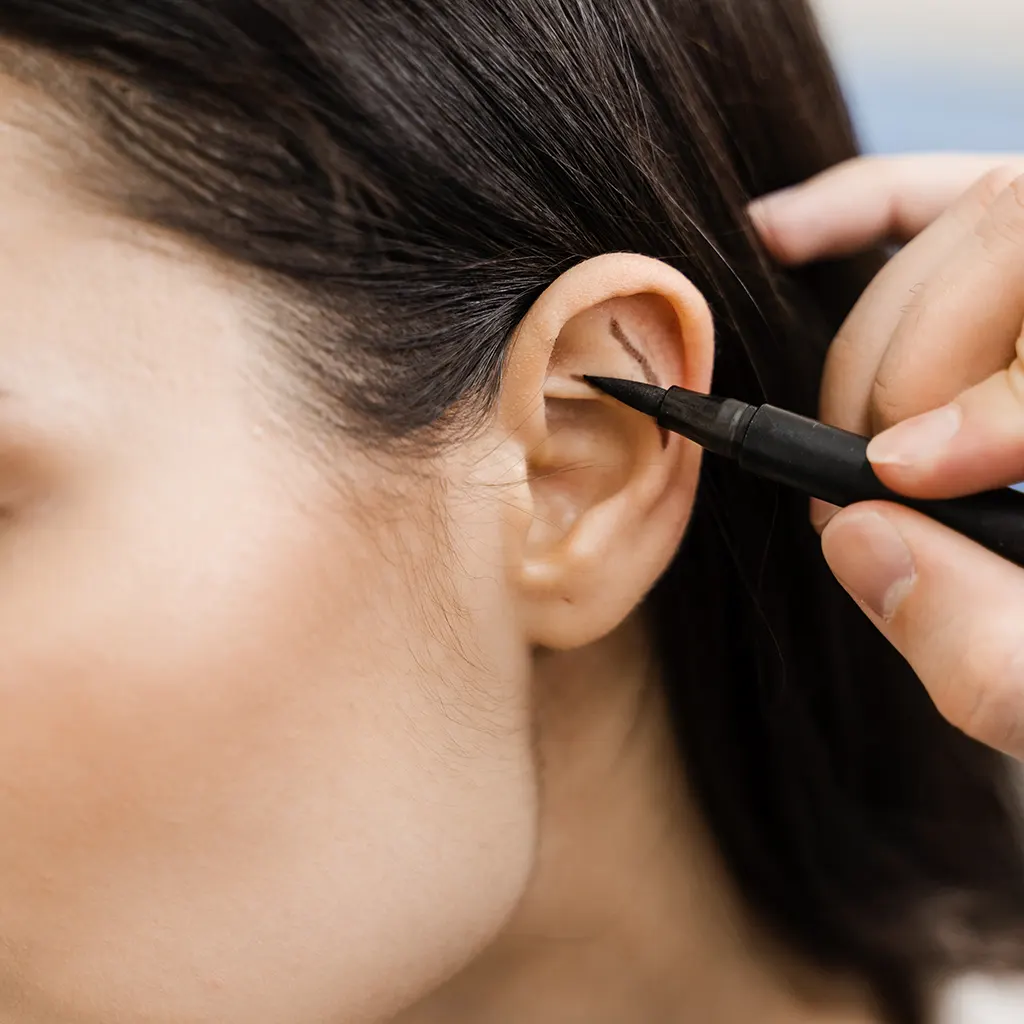
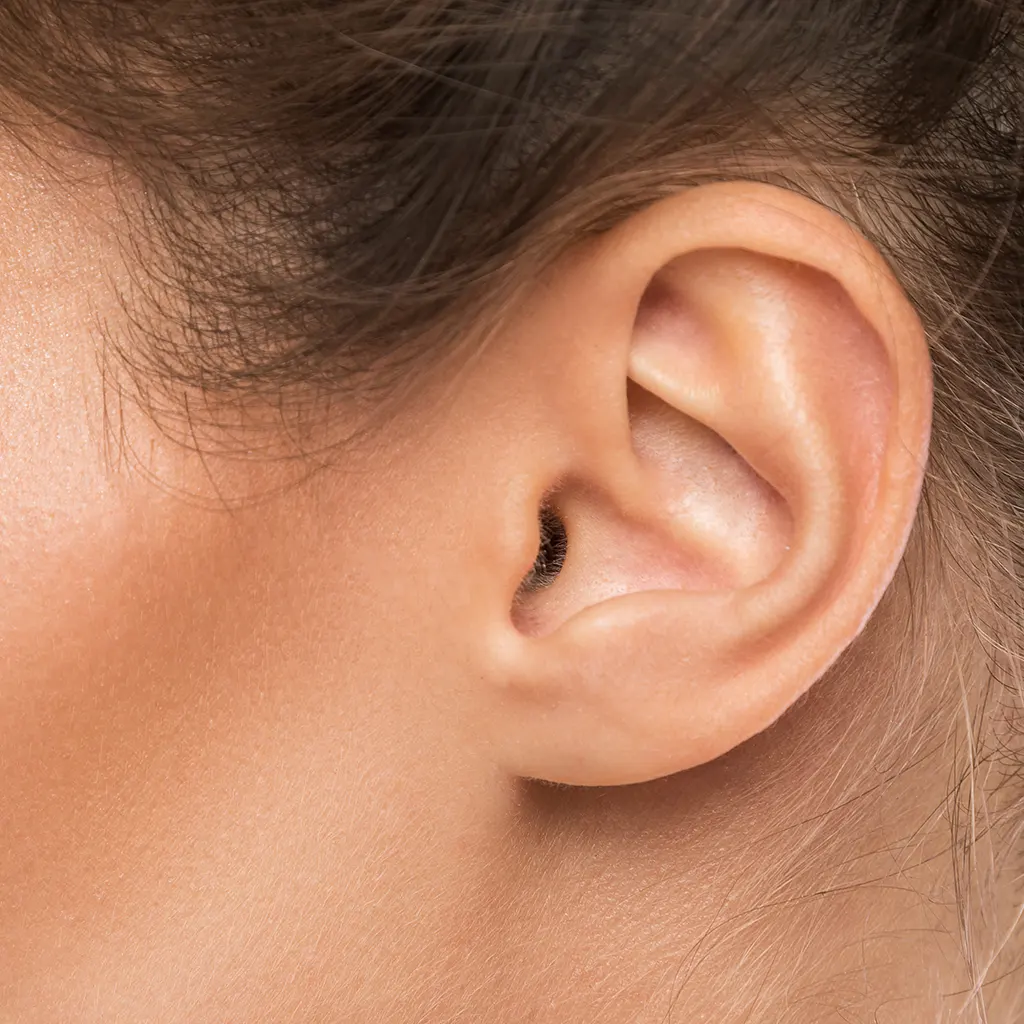
Otoplasty is a surgical procedure used to address prominent ears. Prominence may be related to the shape or size of the concha, reduced formation of the antihelical fold, or a combination of anatomical features.
Otoplasty: Procedure and Postoperative Course
Otoplasty is performed under local anaesthesia in adolescents and adults, while general anaesthesia in a clinic is often used for children. After surgery, a protective dressing is worn for one week, followed by an elastic headband during sleep for approximately one month.
A change may be visible during the initial postoperative period, while the final appearance is assessed after swelling has subsided.
A change may be visible during the initial postoperative period, while the final appearance is assessed after swelling has subsided.
Indications for Surgery
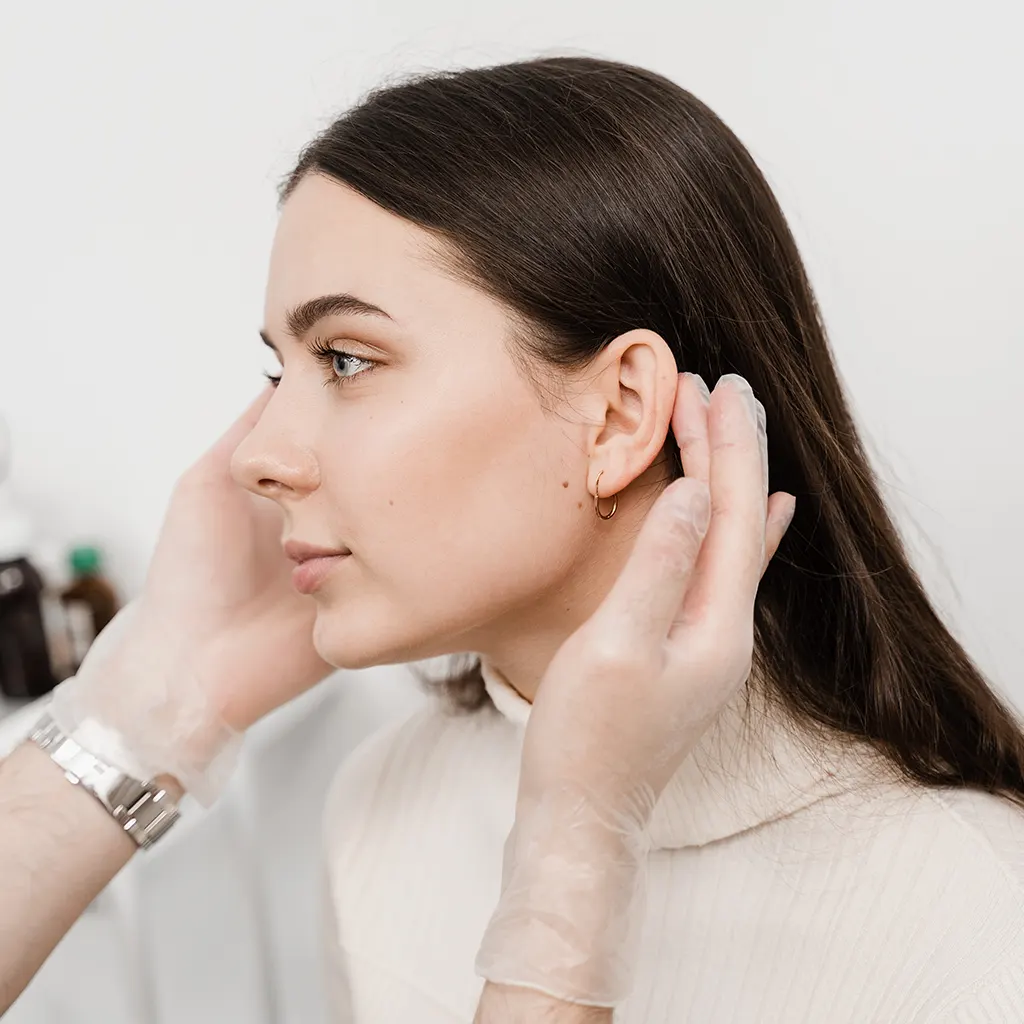
Prominent ears occur in both men and women and may also cause emotional distress in children.
A detailed medical history, careful planning and a clear explanation of the procedure are important before surgery.
A detailed medical history, careful planning and a clear explanation of the procedure are important before surgery.

Duration of Surgery
Surgery usually takes 1–2 hours. Adults generally do not require an overnight stay. Children or selected patients may need to remain for one night, depending on the anaesthesia and clinical assessment. An elastic dressing is worn for seven days, followed by a headband for 1–2 months.
The sutures are absorbable and do not need to be removed.
Clinic Stay: The need for and duration of a clinic stay are determined according to age, the type of anaesthesia and the clinical assessment.
The sutures are absorbable and do not need to be removed.
Clinic Stay: The need for and duration of a clinic stay are determined according to age, the type of anaesthesia and the clinical assessment.
Postoperative Course
After discharge, rest for several days and careful adherence to the doctor’s instructions are recommended.
Regular follow-up at the clinic during the first weeks and months is important.
Detailed discussion with the doctor and adherence to the instructions support appropriate preparation and postoperative care.
Regular follow-up at the clinic during the first weeks and months is important.
Detailed discussion with the doctor and adherence to the instructions support appropriate preparation and postoperative care.

Anaesthesia, Photographs and Consent
In adults, surgery is usually performed under local anaesthesia combined with sedation. Photographs are taken before surgery for planning and afterwards for the medical record.
The consent process covers the procedure and the relevant information, and the patient receives a copy.
For information about otoplasty, contact the clinic for an individual medical assessment.
The consent process covers the procedure and the relevant information, and the patient receives a copy.
For information about otoplasty, contact the clinic for an individual medical assessment.
Patient Reviews
Patient experiences from our clinic and treatments.
 Chris M...

★★★★★
There is a reason why this is one of the best clinics in the city... The team is amazing, and they are all professional, extremely helpful and kind. Maria is truly a star, 100%.
 Παναγιωτης Κ...
★★★★★
Exceptionally well trained, very informative and approachable as a person. I wish all doctors were like this. Even though the clinic was extremely busy, I felt that I had his full attention and he gave me as much time as I needed. His associate was wonderful, and the very kind reception staff assisted me perfectly!
 Eleni T...
★★★★★
My experience at the clinic was very good. The doctor is well trained and knowledgeable about everything!! A clean, welcoming space with very kind and experienced staff!
 Μαρια Π...
★★★★★
I have trusted the doctor and his experienced staff for many years... that says it all. Thank you very much.
Frequently Asked Questions
What is otoplasty?
Otoplasty is surgery used to address prominent ears by modifying selected anatomical features of the ear.
At what age may otoplasty be performed?
Otoplasty may be considered from childhood, usually after the age of 5–6 when ear development is substantially complete, as well as in adolescents and adults.
What discomfort may occur with otoplasty?
Local anaesthesia is generally used in adults and general anaesthesia in children. Mild postoperative discomfort may occur and is managed according to the doctor’s instructions.
How long does otoplasty take?
Otoplasty takes approximately 1–2 hours, depending on the technique and the degree of correction required.
Is an overnight clinic stay required?
Adults generally do not require an overnight stay. Children or selected patients may need to remain for one night, depending on the anaesthesia and clinical assessment.
When is the final result assessed?
A change may be visible during the initial postoperative period, while the final appearance is assessed after swelling has subsided over the following weeks.
Are there scars after otoplasty?
The incisions are placed behind the ear and are generally concealed within its natural contour. Their appearance changes as healing progresses.
What postoperative care is recommended?
After the dressing is removed, an elastic headband is recommended for 1–2 months, mainly during sleep, to protect the ears.
Is otoplasty available in Thessaloniki?
Otoplasty is performed in Thessaloniki by plastic surgeon Dr Andreas Moutsoudis following an individual assessment of ear anatomy.
How is the otoplasty technique selected?
The technique is selected after assessment of ear anatomy and takes into account whether the procedure concerns a child or an adult.
Would you like to discuss which option is suitable for you?
The right indication and a personalised treatment plan are determined after medical assessment.