Non-surgical Treatment
Stretch Marks: Causes and Treatment Options
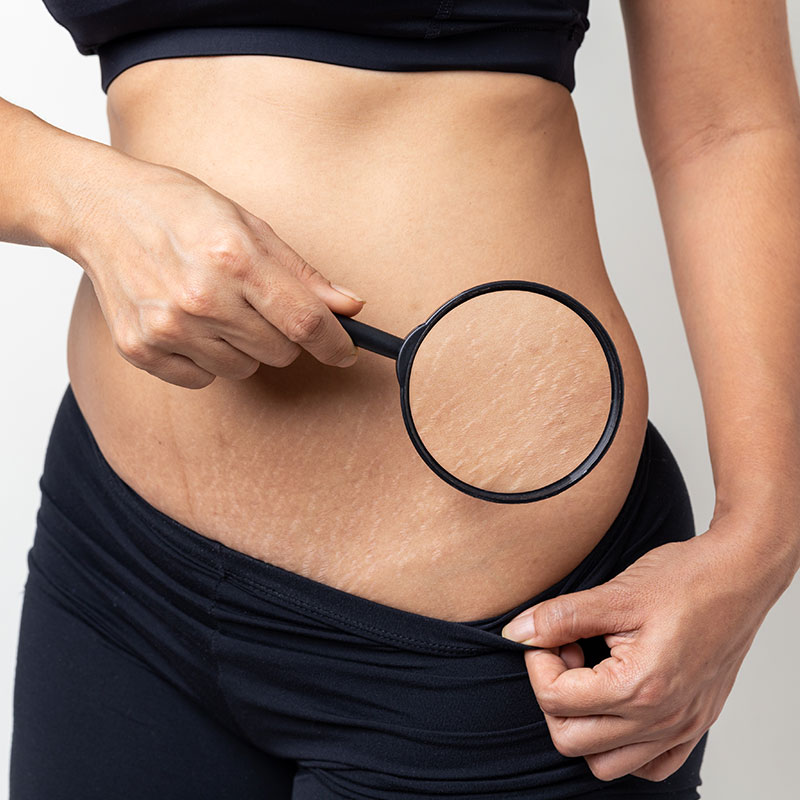
Stretch marks are a common aesthetic concern for women and men. They are a type of atrophic scar caused by rapid stretching of the skin, commonly affecting the thighs, breasts, abdomen, arms and back. Their colour and appearance change over time, and treatment planning depends on their stage and the characteristics of the skin.
What Causes Stretch Marks?
Several factors may contribute to the formation of stretch marks, including:
- Rapid growth during puberty.
- Changes in body weight.
- Hereditary factors.
- Hormonal changes during puberty and pregnancy.
- Use of medicines, particularly corticosteroids.
- Rapid increases in muscle mass in athletes.
Treatment Options for Stretch Marks
Fractional CO₂ laser, Dermapen 4 and Gentlo RF microneedling are among the available approaches for stretch marks.
Fractional CO₂ laser delivers controlled fractional treatment intended to activate the skin’s repair and renewal response.
Fractional CO₂ laser delivers controlled fractional treatment intended to activate the skin’s repair and renewal response.
Dermapen 4 Microneedling for Stretch Marks
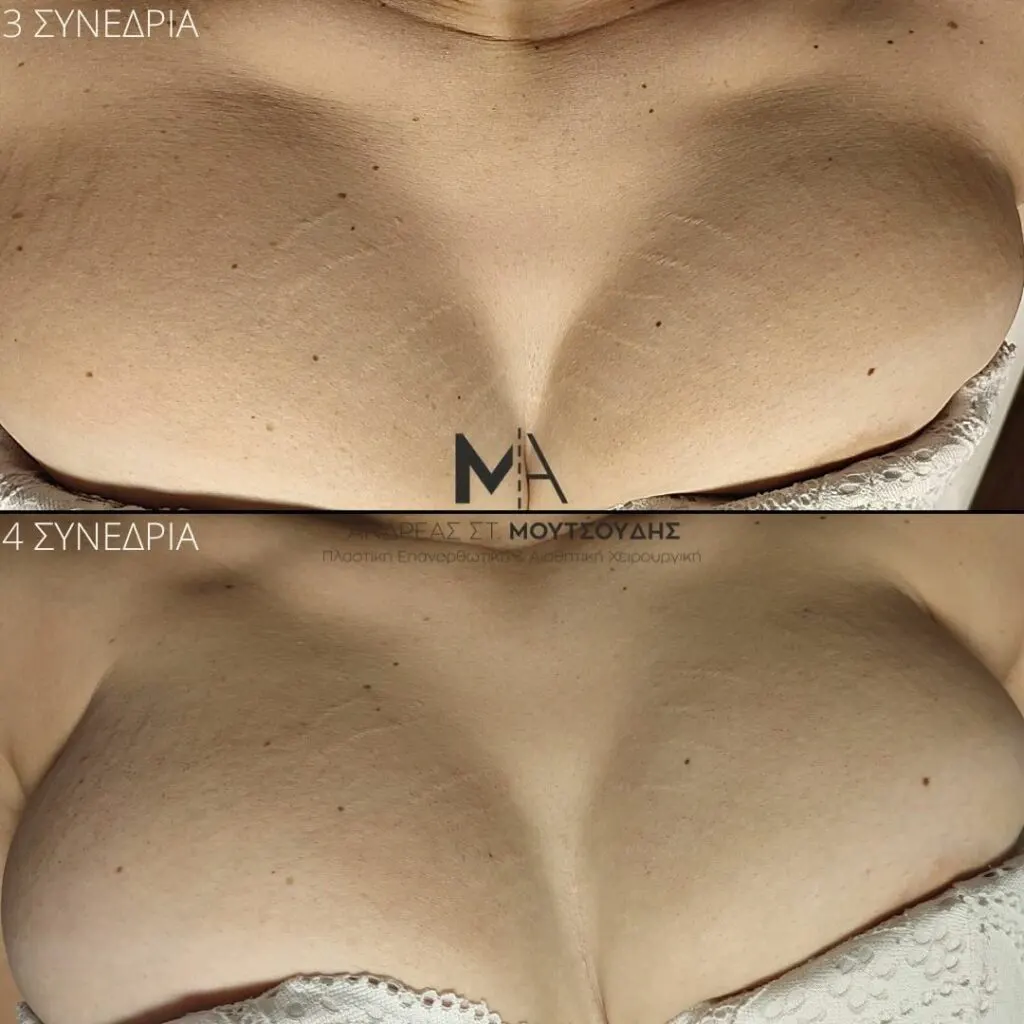
Dermapen 4 uses fine needles to create controlled microchannels in the upper layers of the skin. This process supports the skin’s natural collagen and elastin response. Session timing is determined according to the area, the stage of the stretch marks and the individual treatment plan.

Gentlo RF Microneedling for Stretch Marks
Gentlo RF combines microneedling with radiofrequency energy. Treatment may be considered for different skin types throughout the year, with sessions commonly planned at intervals of 15–20 days where appropriate.
Learn more about Gentlo RF microneedling.
Contact the clinic for information and an individual medical assessment for stretch marks.
Learn more about Gentlo RF microneedling.
Contact the clinic for information and an individual medical assessment for stretch marks.
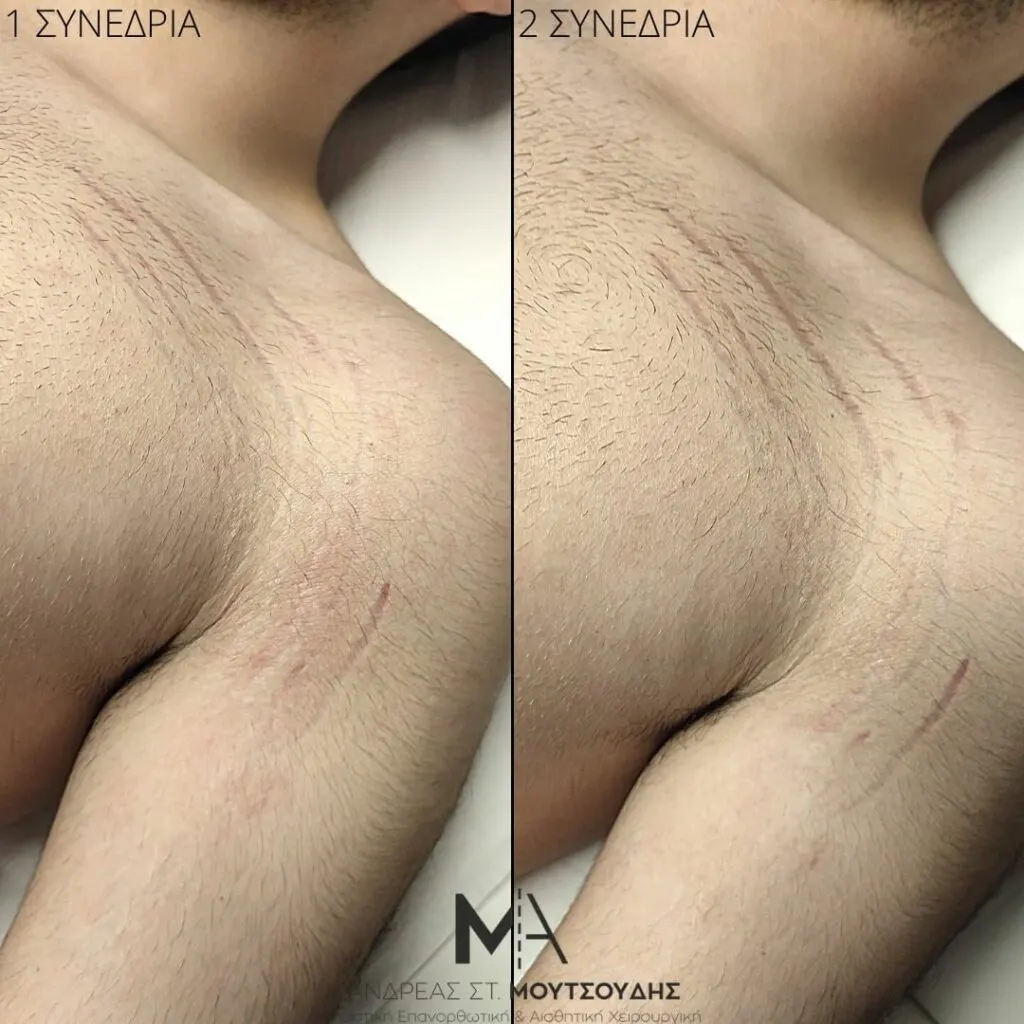
Before & After Results
View real patient cases related to this treatment.
You May Also Be Interested In
More information and useful content related to this treatment.

Frequently Asked Questions
What are stretch marks?
Stretch marks are fine lines that develop when the skin stretches rapidly. They are a type of atrophic scar and commonly affect the abdomen, thighs, breasts, arms and back.
Why do stretch marks develop?
Factors include changes in weight, puberty, pregnancy, rapid muscle growth, hereditary predisposition and corticosteroid use. Rapid stretching affects collagen and elastin fibres.
Are stretch marks permanent?
Stretch marks may not disappear completely, but their appearance and texture may be improved with treatments such as fractional CO₂ laser, Dermapen 4 or RF microneedling.
Which treatments may be considered for stretch marks?
Available approaches include fractional CO₂ laser, Dermapen 4 and Gentlo RF microneedling. Each supports the skin renewal response through a different method.
Are stretch-mark treatments uncomfortable?
Individual sensation varies. A topical anaesthetic cream may be used where appropriate to improve comfort during treatment.
How many sessions may be needed?
A course of 4–8 sessions may be considered, with timing determined by the stretch marks, treatment method, skin and individual response.
May older white stretch marks be treated?
Older white stretch marks may respond more slowly, but treatment may improve their texture and depth. The expected degree of change is assessed individually.
How is treatment safety assessed?
Suitability, device settings and the treatment protocol are determined by trained personnel following assessment of the skin and stretch marks.
When may treatment be performed?
Some treatments may be performed throughout the year. More intensive protocols such as CO₂ laser require careful timing and avoidance of significant sun exposure.
How do Dermapen and RF microneedling differ?
Dermapen creates mechanical microchannels, while RF microneedling combines fine needles with radiofrequency energy. The appropriate method is selected after assessment.
Would you like to discuss which option is suitable for you?
The right indication and a personalised treatment plan are determined after medical assessment.