Blog • Medical Insights
Rhinophyma: What It Is, Causes, Symptoms and Treatment
At a glance
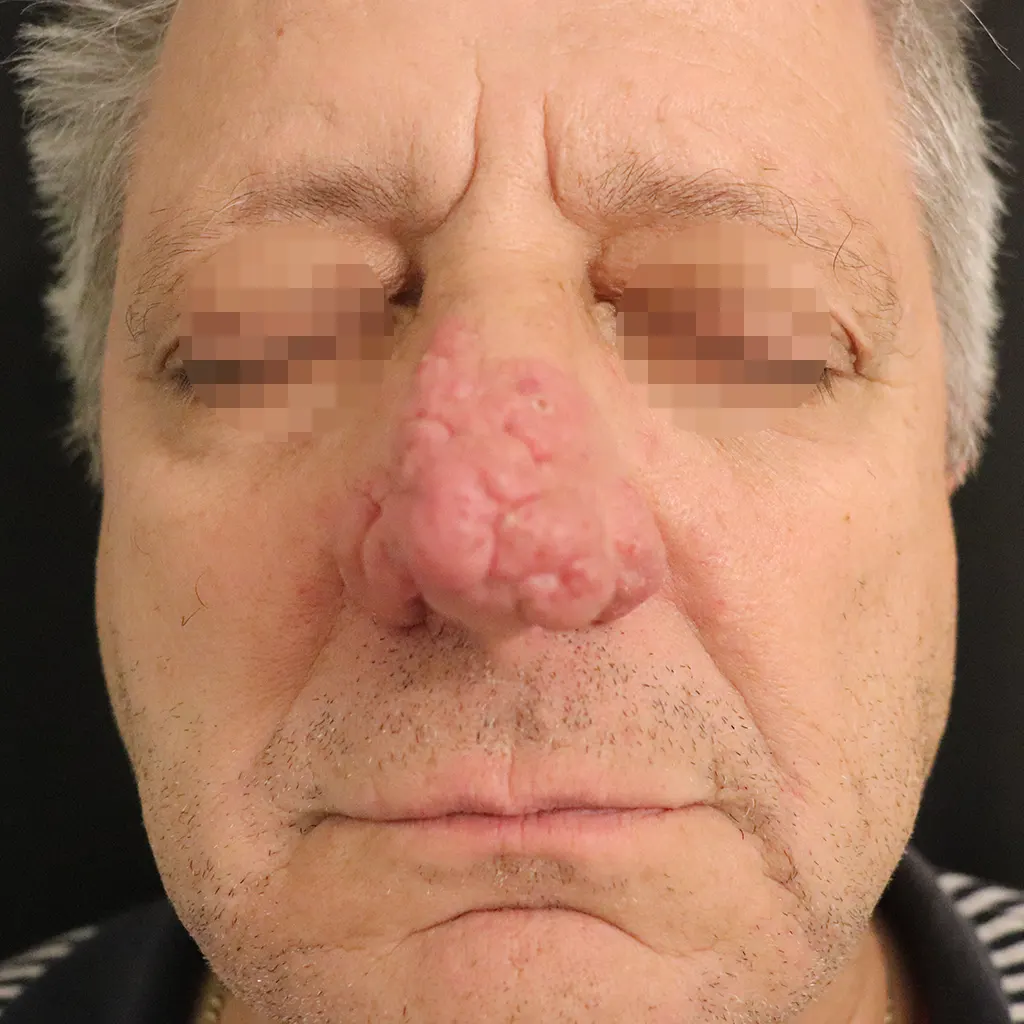
Rhinophyma is characterised by progressive tissue hypertrophy of the nose, prominent pores, redness, vascular changes and an uneven or nodular surface. A causal relationship between alcohol consumption and rhinophyma has not been established. This association has created social stigma for many patients.
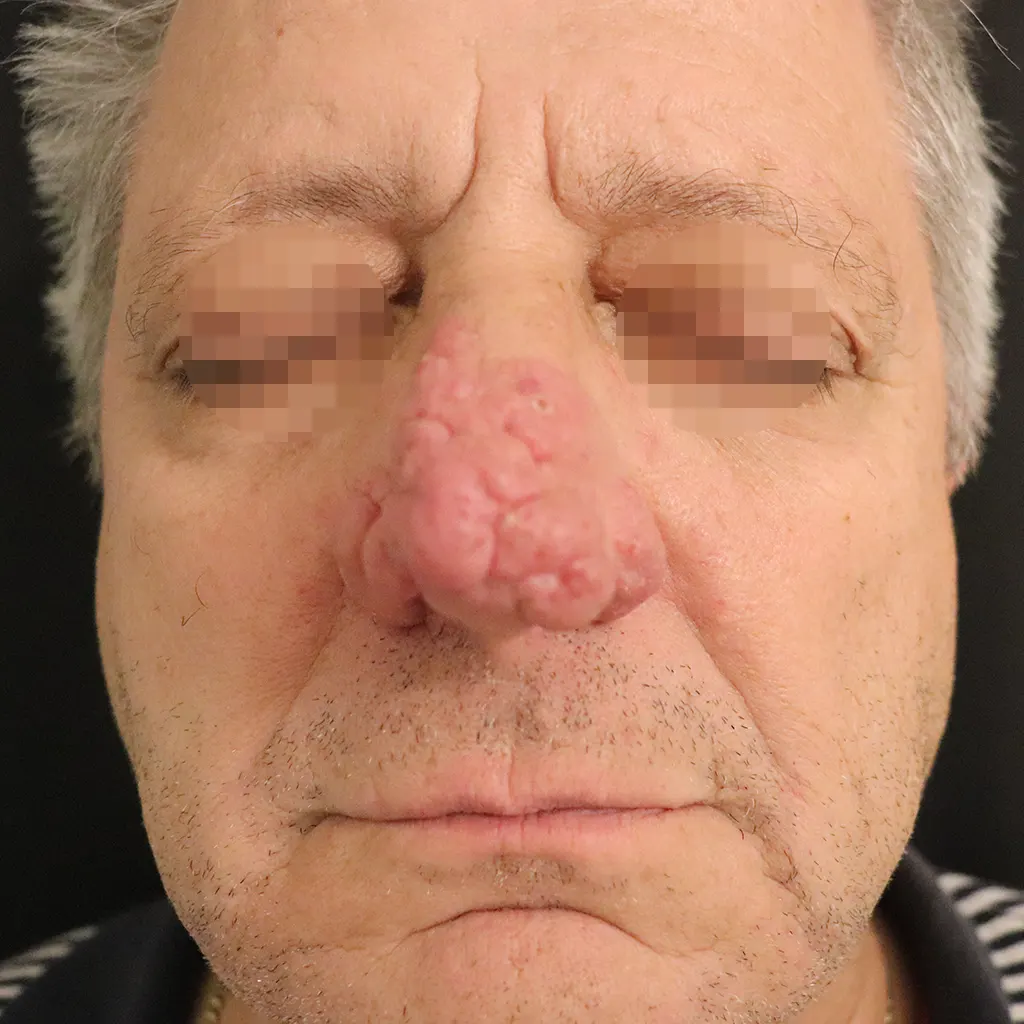
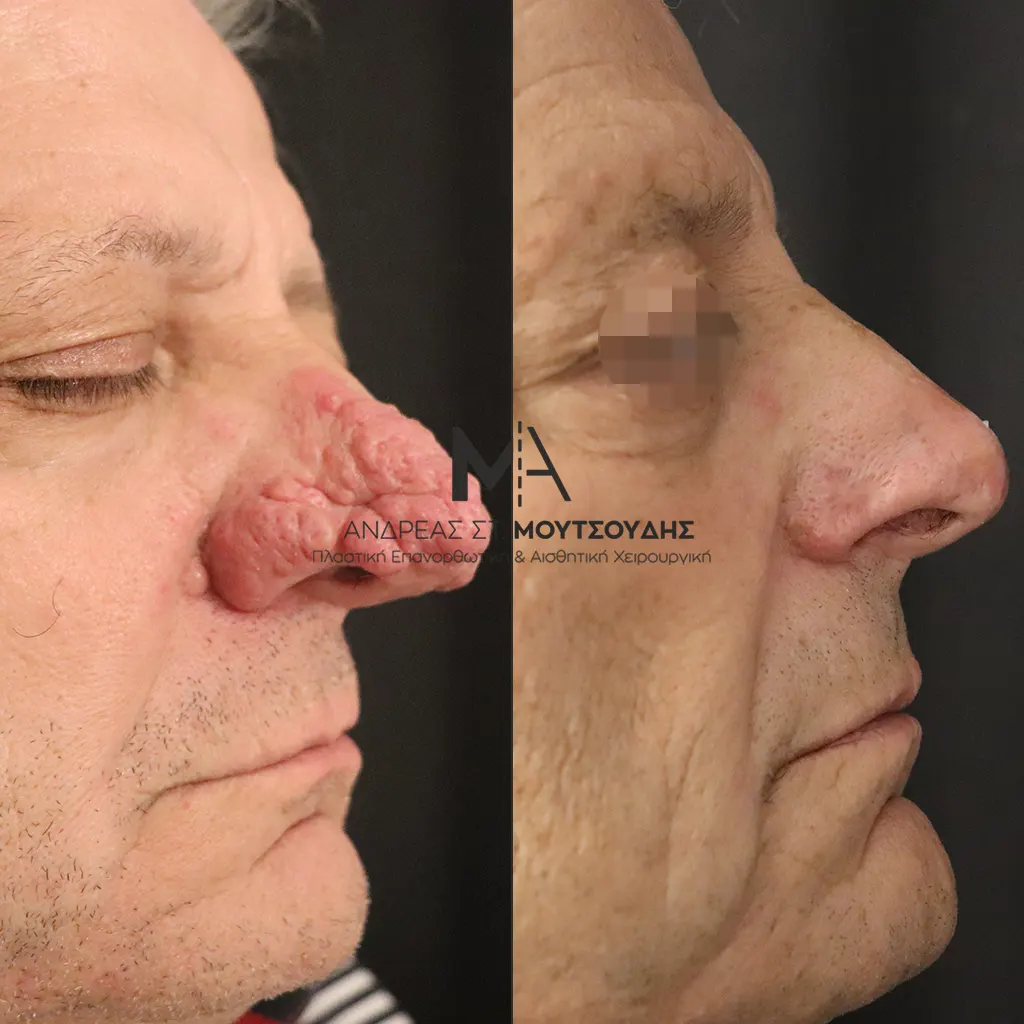
In the early stages, monitoring and treatment of associated rosacea may be needed. Once significant thickening and deformity have developed, reconstruction usually requires removal or reshaping of the enlarged tissue using the technique most appropriate to the individual case.
What is rhinophyma?
Rhinophyma is a form of phymatous rosacea that mainly affects the nose. The skin gradually thickens, the sebaceous glands enlarge and connective tissue increases, changing the texture and shape of the nose.
Progression is usually slow. The changes may begin with prominent pores, oiliness, redness or mild thickening and progress to lobulated, nodular and more pronounced deformities. The lower part and tip of the nose are most commonly affected, although the sides can also be involved.
How is it related to rosacea?
Rhinophyma is closely associated with rosacea, a chronic inflammatory condition of the face that can cause persistent redness, flushing, visible small blood vessels, papules and pustules. Phymatous changes, such as rhinophyma, are considered a distinct phenotype of the condition.
However, not everyone with rosacea develops rhinophyma. In some people, earlier inflammatory signs may have been mild or may not have been recognised before thickening of the nose appeared.
What are the signs of rhinophyma?
The appearance and severity vary from patient to patient. Common features include:
- Gradual thickening of the skin of the nose.
- Enlarged pores and increased oiliness.
- Redness and visible small or larger blood vessels.
- An uneven, pitted or nodular surface.
- Lobulated enlargement and changes to the nasal contour.
- In advanced cases, difficulty breathing through the nose due to thickening of the nasal alae.
Who is more commonly affected?
Rhinophyma can occur at different ages and in both sexes, but is more commonly seen in middle-aged or older men. Its higher frequency in men does not mean that women cannot be affected.
The precise reason for this difference in frequency is not fully understood. Hormonal, vascular, inflammatory and genetic factors are thought to contribute, without a single mechanism explaining every case.
What causes rhinophyma?
The cause of rhinophyma has not been fully clarified. Chronic inflammation, vascular dysfunction, sebaceous gland hyperplasia and increased connective tissue are thought to contribute to progressive skin thickening.
Factors that may be associated
- Chronic or uncontrolled rosacea.
- Vascular and inflammatory changes in the skin.
- Hypertrophy of sebaceous glands and connective tissue.
- Individual and possibly genetic predisposition.
Factors that trigger rosacea flare-ups, such as intense heat, sun exposure, very spicy foods or certain drinks, may temporarily increase redness. This does not mean that they are, on their own, the cause of rhinophyma.
Does alcohol cause rhinophyma?
A causal relationship between alcohol consumption and rhinophyma has not been established. This association is a longstanding social stereotype and can lead to unfair stigmatisation of patients.
In some people with rosacea, alcohol may cause temporary vasodilation and increased redness. This is different from considering it a cause of the hypertrophy and deformity that characterise rhinophyma.
What are the stages of rhinophyma?
Not all cases progress in the same way. For practical purposes, severity may be described as mild, moderate or advanced, depending on the thickening and changes to the contour.
- Mild changes: prominent pores, redness and slight thickening without significant deformity.
- Moderate rhinophyma: visible thickening and contour changes, with small lobules or nodules.
- Advanced rhinophyma: marked lobulated enlargement, significant deformity and possible functional impairment.
Staging helps with treatment planning, but the choice of technique is not based on size alone. The depth of the changes, skin quality, blood supply and the presence of suspicious areas are also assessed.
How is it diagnosed?
Diagnosis is primarily based on clinical examination. The doctor assesses the distribution, extent and depth of thickening, the presence of redness or visible vessels, skin quality and the overall shape of the nose.
Unusual, one-sided, rapidly changing, bleeding or ulcerated lesions may require a biopsy or histological examination. This is important because other skin conditions and, less commonly, malignant lesions may coexist with or clinically resemble rhinophyma.
Is rhinophyma cancer?
Rhinophyma is a benign condition and is not itself cancer. However, the thick, uneven surface can make it harder to recognise a different skin lesion developing in the same area.
For this reason, suspicious areas should be carefully assessed, and surgically removed tissue may be sent for histological examination when considered necessary.
Can it be treated with medication?
Medication may help control active rosacea, inflammation, papules or pustules. In selected early cases, it may also help limit disease activity.
However, it usually cannot remove established hypertrophic and fibrous tissue or fully restore the nasal contour when significant deformity is present. In these cases, surgical or other procedural reconstruction is needed.
Starting or stopping any medication must be decided solely by the treating doctor, particularly when a procedure is planned.
How is rhinophyma treated?
Treatment is tailored to the severity, depth and form of rhinophyma. The main aim is to precisely remove abnormally enlarged tissue, restore the most natural nasal contour possible and preserve the structures that support proper healing.
Surgical removal and reshaping
Hypertrophic tissue may be surgically removed to a controlled depth, followed by careful surface reshaping. The technique allows contour control and, when tissue is obtained, histological examination.
Electrosurgery
Electrosurgery can be used for tissue removal and haemostasis at the same time. It requires experience and careful depth control to limit thermal effects on surrounding tissues.
Laser
Ablative lasers, such as CO₂ or Er:YAG, may be used in selected cases to vaporise hypertrophic tissue and precisely reshape the surface. Each laser type has different haemostatic and thermal penetration characteristics.
Dermabrasion and combined techniques
Dermabrasion may be used mainly for final smoothing after most of the tissue bulk has been removed. Doctors often combine more than one technique because no single method is suitable for everyone.
How is the treatment method selected?
No single technique is superior in every form of rhinophyma. The choice depends on the extent, depth, vascularity and location of the changes, the need for histological examination and the doctor's experience with each method.
The appropriate approach allows adequate removal of hypertrophic tissue, precise reshaping, safe haemostasis and preservation of sufficient sebaceous units or healthy tissue to support healing.
What does reconstruction involve?
Before the procedure, a detailed examination, photographic documentation and a discussion of expected results take place. The doctor also assesses medical history, medication, rosacea activity and any factors that affect healing.
- 1. Assessment: evaluation of extent, depth and functional impact.
- 2. Planning: selection of a technique or combination of techniques.
- 3. Reconstruction: removal of enlarged tissue and reshaping of the nose.
- 4. Healing: surface care and monitoring of re-epithelialisation.
- 5. Follow-up: monitoring of scarring, rosacea and possible recurrence.
What type of anaesthesia is used?
The type of anaesthesia depends on the extent of rhinophyma, the duration of the procedure, the technique and the patient's medical history. Smaller reconstructions may be performed under local anaesthesia, while more extensive cases may require a different anaesthetic plan.
The final decision is made after clinical assessment and a full explanation to the patient.
What are healing and recovery like?
After hypertrophic tissue is removed, the area gradually heals as new epidermis forms. During the first few days, redness, swelling, tenderness, fluid discharge or crusting may occur, depending on the technique and treatment depth.
Proper wound care, use of products recommended by the doctor, sun protection and scheduled follow-up visits are important for healing. Redness may persist for a time and gradually subside.
The exact time for returning to daily activities differs between patients and depends on the extent of the procedure and the course of healing.
What results can reconstruction offer?
Reconstruction aims to substantially reduce abnormally enlarged tissue and improve the nasal contour. It may also improve day-to-day comfort, hygiene in the area and, in advanced cases, nasal breathing.
The final result depends on severity, tissue morphology, skin quality, technique, healing and consistency with postoperative care. The aim is a natural, balanced reconstruction, not an entirely smooth or artificial surface.
Does rhinophyma treatment leave scars?
Any invasive tissue removal involves healing, with a possibility of changes in texture or colour, or scar formation. Risk is affected by the depth of removal, the area, the technique and the skin's individual response.
Careful preservation of sufficient skin structures, proper depth control and consistent postoperative care help reduce the risk of visible scars and pigment changes.
Can rhinophyma recur?
Further thickening or recurrence is possible because the procedure removes existing hypertrophic tissue but does not always eliminate the underlying predisposition or chronic rosacea.
The likelihood and timing of recurrence vary. Follow-up, control of active rosacea, skin protection and early assessment of new changes help maintain the result over the longer term.
When should you see a doctor?
Early assessment is useful when gradual thickening, a change in contour or a new nodular lesion appears on the nose. Particular attention is needed if a change is rapid, one-sided, painful, bleeding, ulcerated or affects breathing.
- A gradual increase in nasal size or a change in shape.
- A new nodule, ulceration or bleeding.
- Marked redness, inflammation or recurrent discharge.
- Difficulty cleaning the area or breathing through the nose.
- Psychological distress or social isolation related to appearance.
Related services and information
Rhinophyma treatment is related to facial reconstructive surgery and the assessment of skin lesions of the nose. Further information is available on the following pages:
Rhinophyma reconstruction in Thessaloniki
Reconstructive plastic surgery
Clinical assessment of rhinophyma
If you notice thickening, nodules or a change in the shape of your nose, you can arrange a clinical assessment. After examination, you will receive information about the diagnosis, available treatment options, expected healing and an appropriate reconstruction plan.
Assessment information: 2312 311 350
Useful information
Frequently asked questions
What is rhinophyma?
Is rhinophyma a form of rosacea?
Does alcohol cause rhinophyma?
Is rhinophyma cancer?
Can rhinophyma resolve with medication?
How is rhinophyma treatment selected?
Is rhinophyma treatment painful?
How long does healing take?
Can it recur after treatment?
Where can I obtain information about clinical assessment?
Would you like to discuss which option is suitable for you?
The right indication and a personalised treatment plan are determined after medical assessment.