Treatment for Men
Gynaecomastia – Surgery and Management
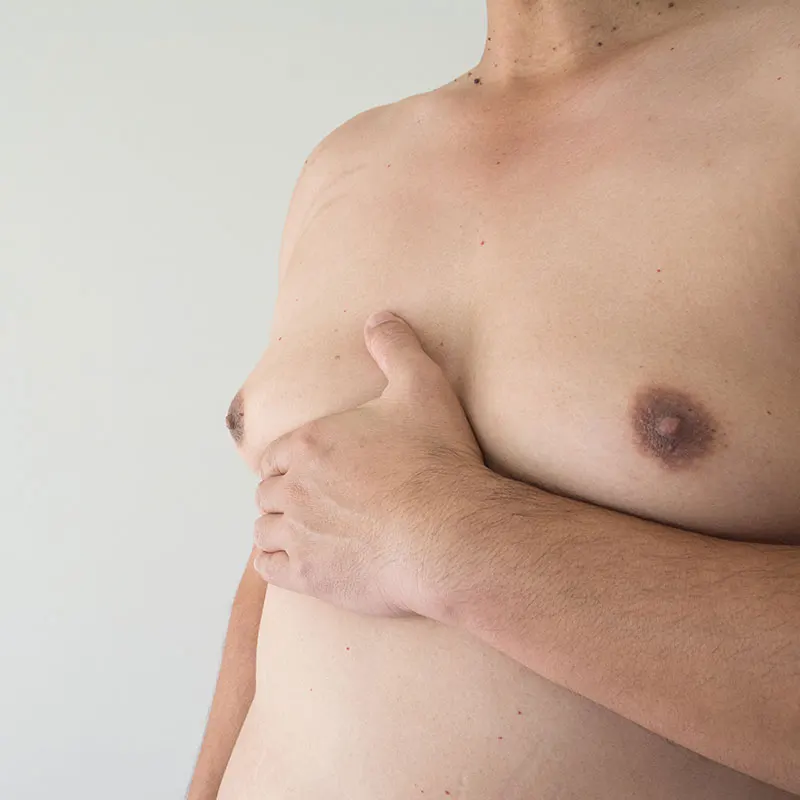
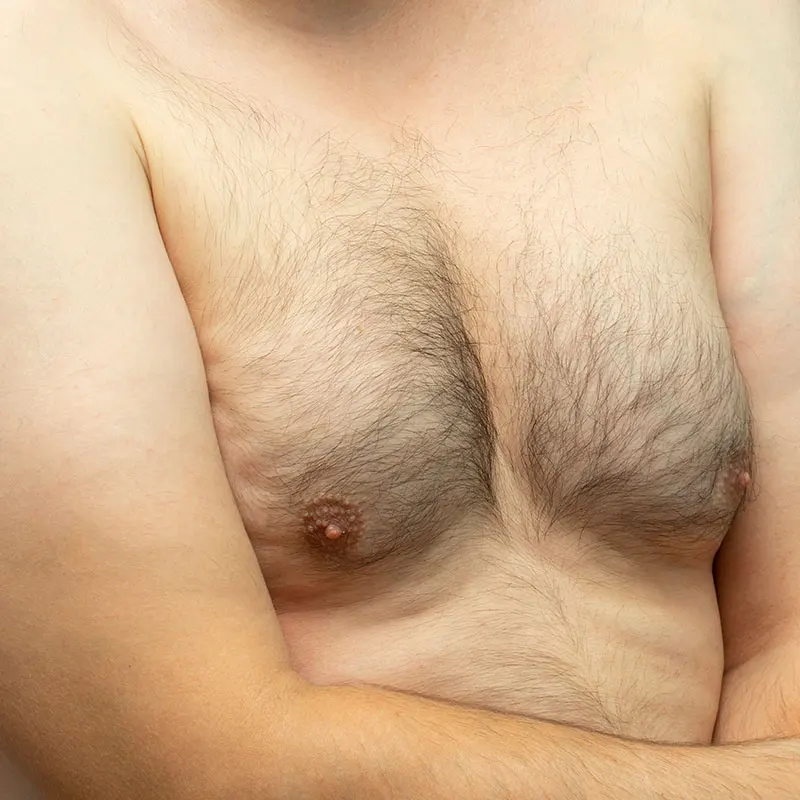
Gynaecomastia is enlargement of the male breast gland. The term was introduced by Galen in the second century AD. It is not uncommon and is reported in 65% of adolescents and 40% of adults. It most often coincides with periods of marked hormonal change, including infancy, puberty and older age.
Causes and Treatment
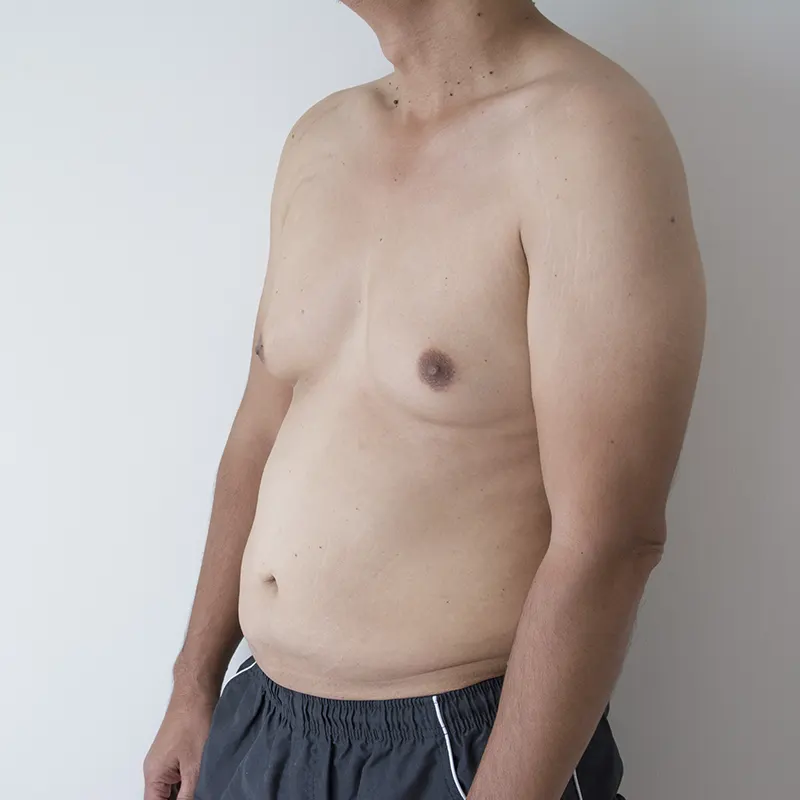
The causes of gynaecomastia vary. It may be idiopathic, meaning that no specific cause is identified, and may be accompanied by excess fat accumulation, described as pseudogynaecomastia. It may also be associated with increased oestrogen activity.
Other factors associated with gynaecomastia include certain medicines, such as phenothiazines, digitalis, reserpine, anti-androgenic agents including spironolactone or cimetidine, and psychotropic medicines that stimulate prolactin secretion. Excessive alcohol consumption may also contribute to enlargement of the breast gland.
Gynaecomastia can broadly be distinguished as follows:
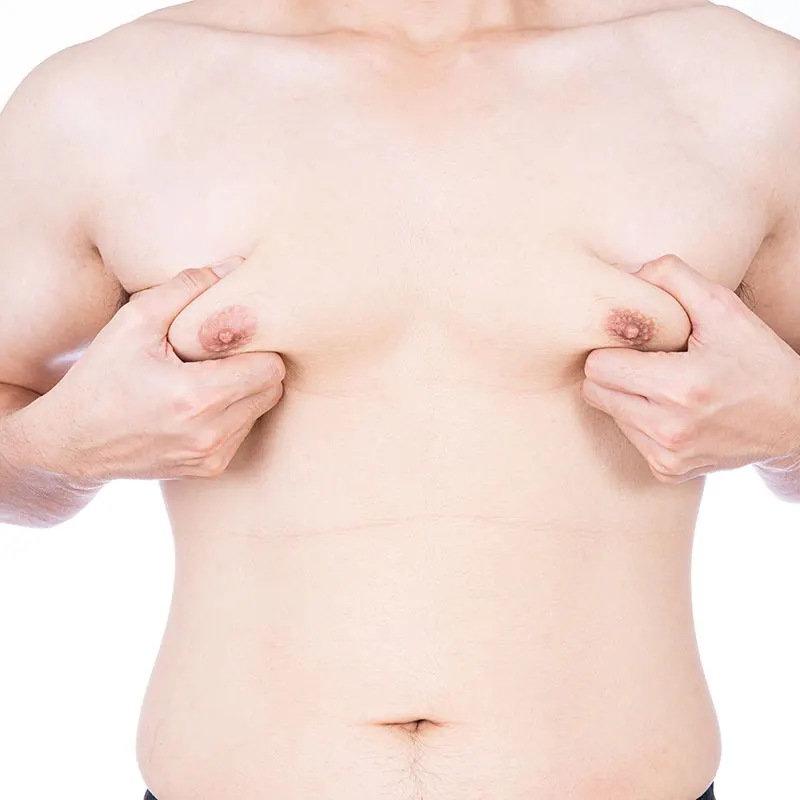
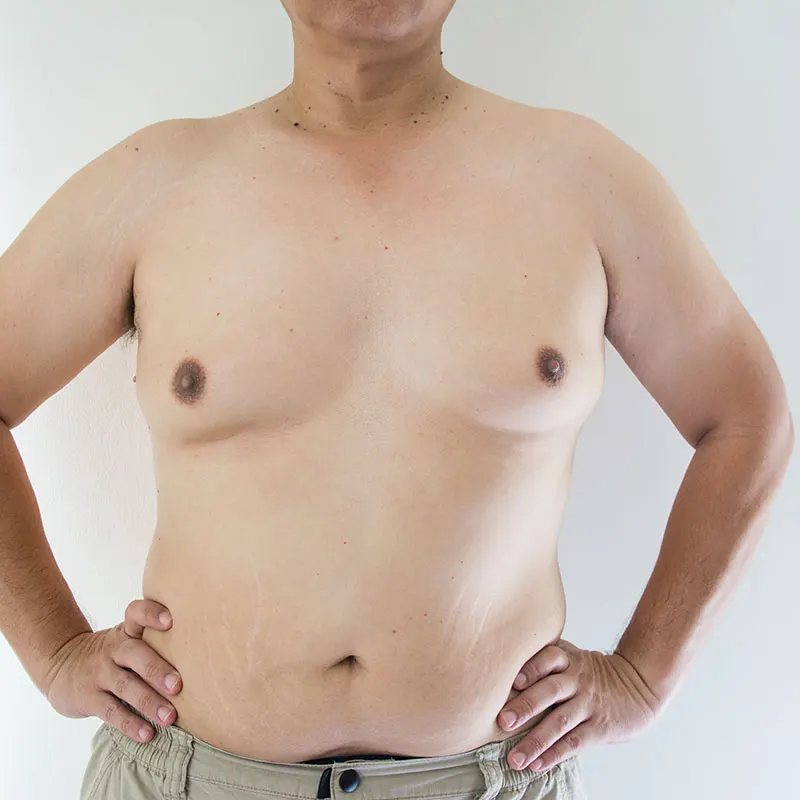
Pseudogynaecomastia: this may be caused by fat accumulation associated with obesity, or by excess skin after weight loss.
True gynaecomastia: this involves actual proliferation of the breast ducts and glandular tissue.
Other factors associated with gynaecomastia include certain medicines, such as phenothiazines, digitalis, reserpine, anti-androgenic agents including spironolactone or cimetidine, and psychotropic medicines that stimulate prolactin secretion. Excessive alcohol consumption may also contribute to enlargement of the breast gland.
Gynaecomastia can broadly be distinguished as follows:
Pseudogynaecomastia: this may be caused by fat accumulation associated with obesity, or by excess skin after weight loss.
True gynaecomastia: this involves actual proliferation of the breast ducts and glandular tissue.
Assessment Before Surgery
Before surgery, the doctor takes a detailed medical history and examines the patient, including palpation of the breasts and thyroid gland, and asks about any medicines being taken.
Assessment of specific hormone levels, including TSH, LH, FSH, prolactin, testosterone and oestrogens, is considered necessary.
Breast ultrasound imaging is also important. If required, assessment may be coordinated with an endocrinologist. Gynaecomastia surgery can be combined with liposuction in other areas, such as the abdomen or flanks, using power-assisted liposuction (P.A.L.), which may help limit bleeding and support recovery.
Assessment of specific hormone levels, including TSH, LH, FSH, prolactin, testosterone and oestrogens, is considered necessary.
Breast ultrasound imaging is also important. If required, assessment may be coordinated with an endocrinologist. Gynaecomastia surgery can be combined with liposuction in other areas, such as the abdomen or flanks, using power-assisted liposuction (P.A.L.), which may help limit bleeding and support recovery.
The Procedure
Power-assisted liposuction (P.A.L.) of the chest is performed first.
The size of the breast gland is then assessed. If it is enlarged, it is removed through a small incision close to the nipple.
If excess skin is also present, an incision may be made around the areola so that the scar is less conspicuous, and the excess tissue is removed through this incision.
The size of the breast gland is then assessed. If it is enlarged, it is removed through a small incision close to the nipple.
If excess skin is also present, an incision may be made around the areola so that the scar is less conspicuous, and the excess tissue is removed through this incision.
Anaesthesia, Photographs and Consent
The procedure is usually performed under general anaesthesia. Photographs are taken before surgery to support planning and after surgery for inclusion in the medical record. Informed consent is also important: it sets out the information relating to the procedure, and the patient receives a copy.
Clinic stay: The patient is admitted to the clinic in the morning and undergoes the standard preoperative assessment.
An overnight stay is generally not required after surgery.
Clinic stay: The patient is admitted to the clinic in the morning and undergoes the standard preoperative assessment.
An overnight stay is generally not required after surgery.
Postoperative Course and Recovery
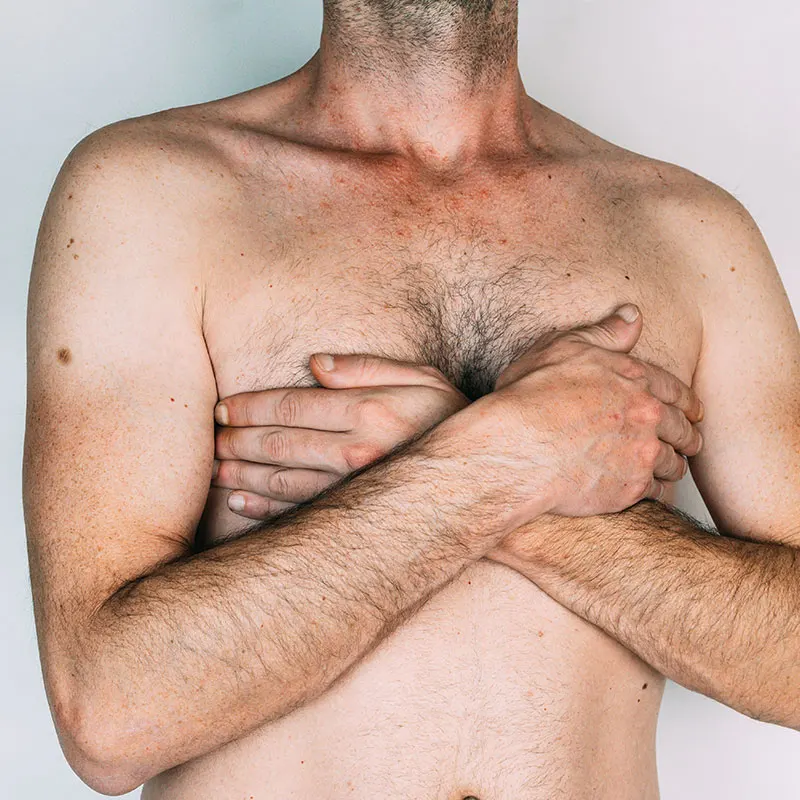
After discharge, rest for several days is recommended, together with careful adherence to the treating doctor’s instructions. A specialised compression garment is used for approximately one month. Sutures are removed after 6–7 days.
Minor bruising and swelling may occur. These are common postoperative findings and usually settle within 10–14 days.
The aim of treatment is to create the contour of a typical male chest rather than to remove all breast tissue.
Minor bruising and swelling may occur. These are common postoperative findings and usually settle within 10–14 days.
The aim of treatment is to create the contour of a typical male chest rather than to remove all breast tissue.
- Regular follow-up at the practice during the first weeks and months after surgery is important.
- An important part of the consultation is ensuring that the patient understands the procedure, its indications, contraindications and possible complications. Questions that arise after the initial consultation should be discussed before proceeding with surgery.

You May Also Be Interested In
More information and useful content related to this treatment.
 Understanding Gynaecomastia: Causes, Assessment and TreatmentGynaecomastia is enlargement of male breast tissue and may have hormonal, medication-related or other causes. Assessment determines whether observation, medical mana…Read article
 Read article
 GENTLO RF Microneedling for Acne ScarsAcne scars are a common aesthetic concern and may affect skin texture and appearance. Selecting the most appropriate approach depends on scar type and depth, skin ch…Read article
Frequently Asked Questions
What is gynaecomastia?
Gynaecomastia is enlargement of the male breast gland. It can occur during infancy, puberty or later life and may be associated with hormonal changes or medicines.
What causes gynaecomastia?
Possible factors include hormonal changes, inflammation, certain medicines such as spironolactone or psychotropic drugs, alcohol use, or fat accumulation in pseudogynaecomastia.
How does pseudogynaecomastia differ from true gynaecomastia?
Pseudogynaecomastia involves fat accumulation, while true gynaecomastia involves enlargement of the breast gland.
Which tests may be needed before surgery?
Assessment includes a detailed medical history, hormone tests such as TSH, LH, FSH, testosterone and prolactin, breast ultrasound and, when required, consultation with an endocrinologist.
How is the procedure performed?
Power-assisted liposuction (P.A.L.) is performed on the chest first. If enlarged glandular tissue is present, it is removed through a small incision close to the nipple. If there is loose excess skin, an incision may be made around the areola.
What type of anaesthesia is used?
The procedure is usually performed under general anaesthesia. The anaesthetic plan is selected after the necessary preoperative assessment.
Is an overnight stay required?
In most cases, it is not. The patient is admitted in the morning, undergoes the procedure and is discharged on the same day.
What does recovery involve?
Rest is required after surgery, together with a specialised compression garment for approximately one month. Sutures are removed after 6–7 days, while bruising and swelling usually settle within 10–14 days.
When can the result be assessed?
The chest contour begins to change as the swelling subsides. The result is assessed progressively over the following weeks.
Is follow-up required after surgery?
Yes. Follow-up appointments during the first weeks and months support assessment of healing and provide an opportunity to discuss any concerns.
Where is gynaecomastia surgery performed?
The procedure is planned after an individual medical assessment and is performed in an appropriately organised clinical setting in Thessaloniki.
Would you like to discuss which option is suitable for you?
The right indication and a personalised treatment plan are determined after medical assessment.